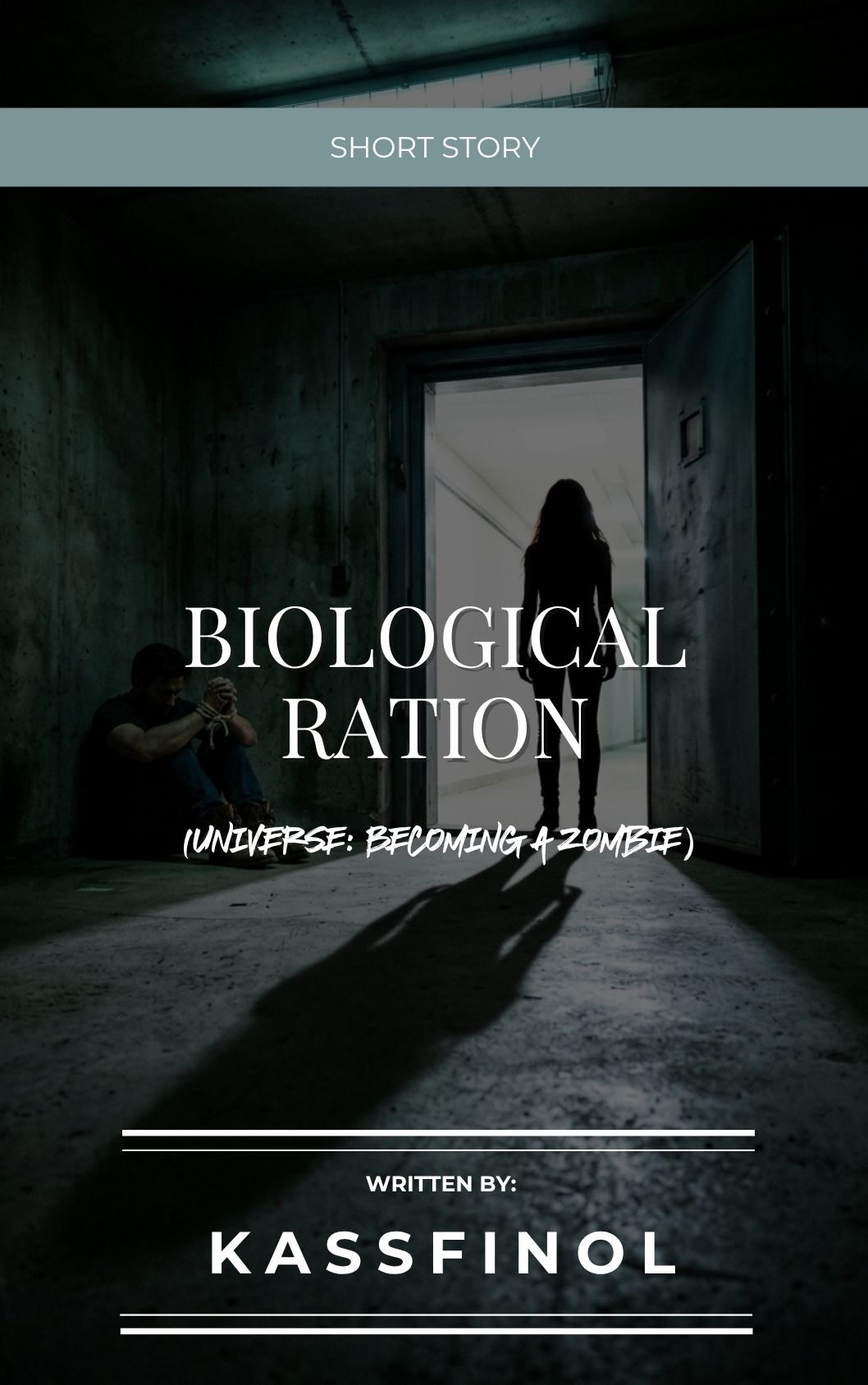
Title: Biological Ration
Author: Kassfinol
Genre: Terror
All rights reserved.
Elías tightened the wrench’s jaw against the retaining nut of the main valve, leaning the weight of his torso into it until the metal gave way with a dull snap that vibrated along the steel pipe.
A blast of icy air loaded with the smell of ozone and industrial grease hit his face as he removed the cover of the central duct, a physical reminder of the fourteen months he had spent working on the life-support level of the Andes Compound, a brutalist concrete structure embedded in the living rock of the mountain range, where the constant throb of the diesel generators seeped through the soles of his boots, contrasting with the frozen moor of the outside world.
His job was to keep that throb going by checking gauges, purging filters, and making sure the air pressure kept contamination at bay between the levels. That same morning, while calibrating the thermal sensors in the loading bay, Elías had witnessed the convoy’s arrival when the hydraulic gates opened to let in a wind that swept the platform, dragging dirty snow and exhaust smoke.
Three armored trucks reversed up to the docks under the watch of the compound’s guards, who, dressed in black tactical suits and respirator masks, formed a perimeter in absolute silence. Thirty malnourished civilians wrapped in threadbare coats climbed down from the flatbeds, among them a man in a torn plaid shirt holding a little girl wrapped in a plastic tarp.
The survivors wept, raising their hands toward the guards, then falling to their knees on the frozen concrete, but the intake technicians ignored their pleas to scan them with ultraviolet lights, fit them with plastic wristbands with barcodes, and push them toward the elevators of the preliminary quarantine area in a mechanical process carried out under strict silence.
Eight hours later, after wiping the back of his glove across the touchscreen to clear away the coal dust, Elías’s diagnostic tablet showed a crack in the compound’s logistics, recording a twenty percent pressure drop in the sublevel. That zone was listed in the manuals as “Sector 4: Beta Containment,” a place where the rules said they only kept the irrecoverable infected captured for studying the virus. The general census numbers blinked green in the upper corner, marking two hundred permanent residents, the same figure as a year ago, while water-ration consumption on the quarantine level read zero and electricity use in the decontamination showers showed no spikes. The thirty new people did not appear in the life-support system. After clipping the tablet to his tool belt, he noticed that the air rising through the duct hatch did not match the chemical sensors’ reports: the medical level’s disinfectant smell was absent, replaced by a thick mixture reeking of oxidized copper, stagnant fluids, and exposed flesh, trying to hide beneath automatic bursts of industrial ammonia.
He loosened the retaining screws of the grille to separate the aluminum plate and fit his shoulders into the square opening of a corrugated tunnel barely sixty centimeters wide. Switching on his helmet lamp, the beam of light cut through the absolute darkness, illuminating a steep slope that sank into the bowels of the mountain.
He advanced on all fours, letting the icy metal seep through the fabric of his uniform to steal his body heat with every meter of descent, forced by the cramped space to keep his elbows glued to his ribs and drag his boots without bending his knees, while the hum of the high-capacity extractors vibrated against his sternum like continuous white noise.
After twenty meters of crawling, the duct made a sharp turn to the left, forcing him to hold his breath when he noticed a dark, sticky crust clogging the pores of the particle filter at the joint. Running his gloved fingers over the wire mesh and scraping the surface with his nail, thick garnet-colored flakes fell onto the aluminum, revealing a buildup of dried blood blown upward by the extraction fans from the sublevel. His pulse hammered at the base of his neck as he processed that the administration’s directives demanded activating the fire protocol for any biological leak in Sector 4, yet the alarms remained silent in absolute quiet.
He continued the descent, feeling the air grow heavier until it saturated his lungs with a damp heat that contrasted with the cold of the aluminum, dragging himself along until the duct ended at an intersection blocked by a ventilation grille reinforced with steel bars.
He switched off his helmet lamp to let the darkness envelop him before his pupils adjusted to the white light filtering through the slits in the metal, crawling noiselessly with his belly pressed to the duct floor until he rested his cheek against the grille.
Below, the room had no microscopes or vital-sign monitors of a research team, revealing itself instead as a chamber with walls covered in white tiles and drainage channels in the floor, where boot marks traced paths of dark fluids dragged toward the drains.
The double gates at the north end opened with a pneumatic hiss to admit two men wrapped in yellow biological protection suits who came in pushing a rolling gurney. On the rigid plastic mattress, a man thrashed violently, fighting the thick leather straps that pinned his wrists against the frame’s tubes and fixed his ankles to the edge. Elías pressed his fingers against the duct’s aluminum until his knuckles ached, recognizing in the tied man the torn plaid shirt at the shoulder, identifying him as the same civilian who hours earlier had climbed down from the armored truck.
The prisoner tried to scream, managing only muffled grunts because of a surgical plastic gag that held his jaws apart to the point of dislocation by means of Velcro straps around the back of his neck. Coming in right behind the gurney, a technician in a white coat with a tablet strapped to his forearm checked a barcode on his screen under the heading “ZV Feeding Protocol” and nodded toward the men in yellow, then took a thick-plunger syringe from his upper pocket. As the technician approached the gurney, the man in the plaid shirt opened his eyes, turning his head from side to side in a futile attempt to dodge the needle, until a nitrile-gloved hand held his skull still, seeking the vein to empty the syringe’s contents straight into his neck.
The resistance faded in less than ten seconds as the civilian’s muscles lost tension, his head falling to one side with his arms limp on the leather, though his eyes remained open and dilated in absolute fixity. The guards in yellow suits pushed the gurney to the center of the room to align the wheels with red marks painted on the tiles, while the technician walked to the opposite wall and swiped a card through the magnetic reader.
After keying in a numerical sequence, the safety bolts snapped and the armored hatch slid on rails to reveal an adjoining room sunk in gloom. That interior space, furnished with a reading armchair and empty shelves, held at its center a human figure who, far from showing the erratic movements of a beta-stage infected, walked into the white room with absolute precision.
She was a young woman with pale skin, her sclera darkened by the same virus that reanimated the dead on the surface, but she advanced wrapped in a gray tracksuit without a single stain of putrefaction. Seeing her enter, the two men in yellow retreated toward the double gates without turning their backs, followed by the technician, who made one last note on his screen before leaving the room and letting the steel leaves close with a dry thud.
The woman in gray stopped beside the gurney and leaned her head over the face of the paralyzed man, who watched her motionless while a single tear gathered at the corner of his eye until it slid down the plastic of the mattress.
She brushed a sweaty lock of hair from his forehead in an almost delicate gesture before opening her mouth and descending onto his bare neck to sink her teeth into the jugular vein. Elías stifled a guttural sound at the sight of the first arterial spurt staining the white plastic, watching as the woman ignored any animal frenzy to consume the tissue with calculated movements, swallowing the thick blood while the prisoner’s body suffered microscopic tremors beneath the straps.
When the smell of fresh blood flooded the duct, sending a jolt through his stomach, Elías pushed his torso back to move away from the grille, dragging his right boot across the metal until the rubber sole caught on the rivet of a joint flange.
Pulling with blind force, the heel broke free all at once. The steel toe struck the lower aluminum sheet, spreading the impact through the entire ventilation system, a metallic echo that forced the woman to stop her jaw. She raised her face, chin and chest soaked in red, and turned her neck toward the grille, fixing opaque pupils that seemed to pierce the darkness of the duct and lock straight onto Elías’s eyes.
Driven by an instinct that crushed any rational calculation, Elías shoved himself backward, ignoring the painful scrape of his knees against the corrugated aluminum, to turn his body on its own axis, compressing his lungs before switching on his helmet lamp and beginning to crawl up the ascending slope.
The metal groaned beneath his knee pads as he threw the weight of his shoulders forward, just as the red emergency lights flickered at the duct joints, accompanied by a strobe alarm and the wail of containment sirens that cut through the extractors’ hum. Every breath burned in his windpipe as he advanced through a duct that seemed to narrow against his back, trying to reach the pale square of light of the hatch thirty meters away while the sound of heavy boots pounded the floor of the machine room above. Reaching the edge of the opening, he gripped the aluminum rims with both gloves to pull himself out of the ventilation system, falling sideways onto the gray concrete.
He threw his helmet to the floor and got to his feet stumbling, crossing the machine room in a hurried run until he pushed open the door to the main corridor, where he rounded the corner skidding across the linoleum floor, only to stop in less than five meters. The hallway was blocked by six tactical guards in Kevlar vests and ballistic helmets forming a solid wall from side to side, holding strict silence without raising their rifles or shouting halt orders.
Elías stepped back two paces, the air stuck in his throat, letting out a cracked warning about the people murdered in the sublevel and a numerical error in the census, words that crashed against the guards’ immobility until the formation parted to the sides. A tall man in a white coat came out of the electrical distribution room, and although Elías turned his face at the sound of fabric brushing the wall, the movement came too late against two guards who advanced to grab his arms, twisting his wrists behind his back with a pressure that threatened to dislocate the joints. The technician stopped in front of him holding a polished metal cylindrical device. “Sector 4 pressure always stabilizes with a monthly purge,” said the doctor, raising the cylinder to press it against the side of the mechanic’s neck with a pneumatic snap that pierced the skin. A wave of thick cold flooded the carotid vein, sinking straight toward his chest to extinguish the strength in his legs, forcing the guards to let go and let his body collapse against the linoleum in an impact that split his lip, a pain that vanished instantly, swallowed by the chemical numbness.
Skipping any interrogation about the security breach in the sublevel, the technician leaned over him to unbutton his maintenance coveralls and tear the plastic credential from his chest, ordering his transfer to the quarantine cells under the classification of biological ration. Two pairs of hands grabbed him by the armpits to drag him down the hallway toward the service freight elevators, clearing a path between the black boots and leaving a red trail from his split lip across the immaculate floor.
He woke with the right side of his face pressed against a slab of icy cement, feeling the numbness give way to a stabbing tingle in limbs he tried to move without success, held by thick polymer straps that bound his wrists behind his back, cutting off the blood flow.
He raised his head, recognizing the smell of industrial ammonia masking the stench of stagnant fluids, confined in a windowless chamber under the flickering light of a fluorescent tube set between reinforced concrete walls. Bracing his heels against the floor, he managed to drag himself until his back rested against the far wall, keeping his eyes fixed on the armored steel hatch three meters away just as a mechanical hum resonated inside the wall. The hatch’s magnetic bolts snapped in a heavy sequence, sliding the latches back to let the door roll on its rails and open a dim square of light toward the corridor.
With his knees drawn against his chest and his heart pounding his ribs until his breathing turned into short gasps, he waited for the arrival of a tactical guard or the technician, but the only sound that crossed the corridor was the steady rhythm of footsteps marking the tile.
They were calculated steps with a precision alien to the chaos of common infected, an echo that stopped at the threshold when a silhouette cut the outside light to project a long shadow to the tips of his boots.
Elías pressed the back of his neck against the concrete, clenching his teeth in an attempt not to scream, watching in silence as the shadow lifted its foot to take the first step into the cell, recognizing in that posture the same lethal inertia of the woman in gray.
The End
All rights reserved