



What Zombie Fiction Teaches You That Official Documents Can’t
Here’s where we get to the territory that interests me most as a writer.
The documents we’ve reviewed — CONPLAN 8888, the CDC graphic novel — are planning exercises. They assume institutions function, chains of command hold, and people follow orders.
Good zombie fiction works exactly the other way around. It asks what happens when institutions don’t function, when chains of command break, when people don’t follow orders.
The best zombie apocalypse literature doesn’t tell you what to do to survive. It asks who you become when survival is the only thing that matters.
CONPLAN 8888 assumes the military will carry out orders. Fiction asks what happens when the soldier doesn’t want to shoot his own neighbors. The CDC assumes people will follow the supply list. Fiction asks what happens when the supply list runs out and the person next to you has food you need.
It isn’t empty entertainment. It’s a rehearsal of the ethical decisions no official document can make for you.
The Argument Governments Prefer Not to Make
There’s an inherent tension in all government risk communication. Governments want citizens to prepare individually, but they don’t want to admit the limits of their own capacity to protect them.
On one hand, governments want citizens to prepare individually. They publish lists, run campaigns, and ask people to have emergency kits. They want you to be ready.
On the other hand, governments are reluctant to communicate too much about the real risks. If they tell you the truth about how fragile the system is, people might panic. Or they might lose trust. Or they might ask uncomfortable questions about why the system is so fragile in the first place.
The result is lukewarm risk communication: messages that are technically correct but emotionally empty. “Be prepared.” “Have a plan.” “Stay informed.” All true. All insufficient.
The zombie approach was, in this sense, paradoxically more honest. By using an impossible scenario, the CDC could talk about real preparedness without triggering the political costs of talking about real disasters. The zombie was a mask that allowed the truth to be spoken.
The story of Todd and Julie in the CDC graphic novel is revealing: they follow the instructions, they prepare, they do everything right — and the safe zone is overrun anyway. The message, whether intentional or not, is that preparation helps but doesn’t guarantee anything.
The subliminal message the CDC probably didn’t articulate consciously is that institutions will try, but they might fail. And when they fail, you’re on your own.
That’s true. And it’s something governments rarely say so clearly.
The Post-COVID Status Quo: Did We Learn Anything?
The COVID-19 pandemic was, by any reasonable definition, the most significant public health emergency of the last century. It was a real-world test of every system CONPLAN 8888 and the CDC campaign were designed to protect.
The honest answer is: very little.
Early warning systems improved in some countries. Vaccine development accelerated dramatically. Remote work became normal. Some supply chains were diversified.
But the structural problems COVID exposed — slow institutional response, confused communication, unequal access to resources, political interference in public health decisions — haven’t been solved. In some cases, they’ve gotten worse.
As the 2025 analysis of the CDC’s current state points out, the agency that ran the zombie campaign has itself been weakened by budget cuts, political pressure, and loss of public trust.
This isn’t an argument for nihilism. It’s an argument for understanding that preparedness is a continuous process, not a one-time purchase. The kit in your closet matters less than the knowledge in your head and the network around you.
Why Zombies Will Keep Being Relevant
The zombie as a cultural figure has survived decades because it adapts to whatever fear is current.
In the 50s and 60s: the zombie was communism. The mindless horde, the loss of individuality, the fear of infiltration.
In the 70s and 80s: the zombie was consumerism. The shopping mall in Dawn of the Dead, the mindless consumption, the critique of a society that consumes without thinking.
In the 2000s and early 2010s: the zombie became a metaphor for pandemic and infrastructure collapse. 28 Days Later, World War Z, The Walking Dead — all of them explore what happens when the systems we depend on stop working.
In the 2020s onward: the zombie is no longer just a metaphor for fear of disease. It’s a metaphor for disinformation, for polarization, for the feeling that the people around you have stopped thinking and are just repeating what they’ve been told.
And now, in 2026? The zombie can be the disinformation itself: the mindless repetition of falsehoods, the refusal to think critically, the contagion of bad ideas.
The zombie has always been the mirror. What changes is what we see in it.
What Nobody Wants to Admit: The Individual as the First Line of Defense
CONPLAN 8888 has a section that catches the eye: in the limitations list, the document admits that USSTRATCOM has no ground forces of its own capable of repelling a zombie assault. It depends on other entities — national guards, local police, civil authorities — handling the initial ground response.
Translation: the Strategic Command that controls the most powerful nuclear weapons in the world has a plan that, at street level, depends on someone else doing the initial work.
That someone else is you.
Not in the heroic action-movie sense. In the practical sense: you are the person who knows where the water is, who has the supplies, who knows the neighbors, who can make decisions when the official channels are silent.
Governments make plans. Institutions make plans. But plans are executed by people, and the first person in the chain is always the individual.
This isn’t anti-statism. It’s the recognition that the State, however powerful, is made of people, and people are the first line of defense.
Conclusion: The Zombie as a Tool, Not a Joke
We’ve covered a lot of ground in this article.
From the Pentagon’s official zombie taxonomy to the CDC campaign that crashed federal servers, from the phases of a military contingency plan to the supply list in your closet.
What’s the point of all this?
That zombies, from their origin in Haitian voodoo to their current status as a metaphor for disinformation, have always been a way of talking about the things that frighten us most: loss of control, collapse of institutions, the fragility of the systems we depend on.
Conversations about how fragile the infrastructure is, about who gets saved first, about what happens when the plan meets reality — these are conversations worth having, even if they start with zombies.
Governments use zombies because it’s easier than telling the truth directly. But the truth is there, in the documents, in the limitations lists, in the assumptions, in the supply lists.
The zombie gives you permission to think about that without freezing in fear. That’s its real function.
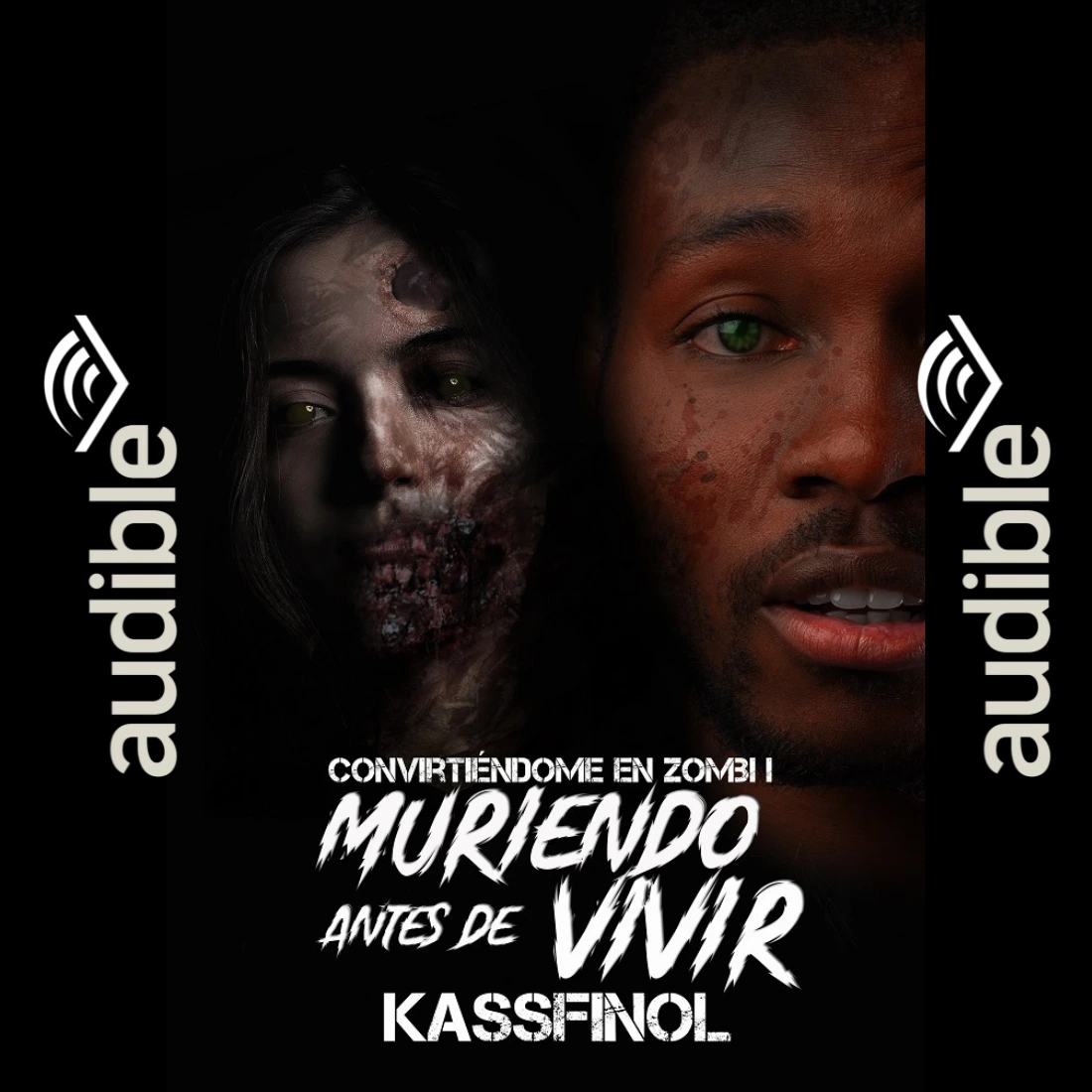
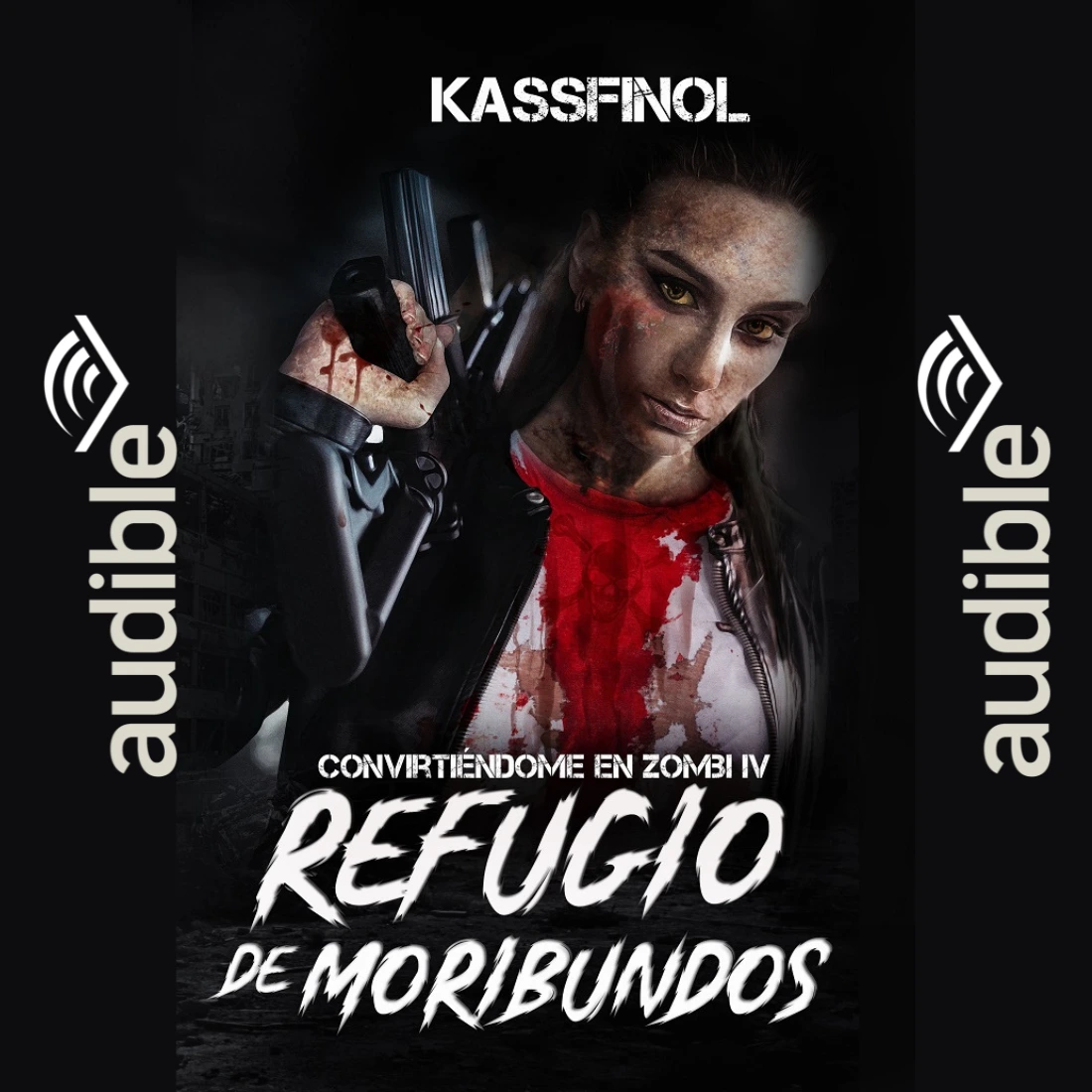
If this article whetted your appetite to explore the zombie apocalypse in more depth — not in government manuals but in narrative that puts you inside the experience — I have something for you. My zombie novels are designed exactly for that: so you can feel from the inside what it means to make impossible decisions when the world has come apart. The series starts on Amazon, and if you survived this far into the article, you’ll probably survive the first chapter too.

Do you have your emergency kit ready? Which part of this article surprised you most? Leave it in the comments.
Warning before we start: This article is long. Very long. Deliberately long. Because the topic deserves it and because we’re not here to make two-paragraph content that serves nobody. If you’re looking for a 300-word summary, Google has options for you. If you want to truly understand what’s behind the zombie protocol, why governments invest money and resources in planning a living-dead apocalypse, and what that tells you about the real world you live in… stay.
First Things First: No, You’re Not Reading a Clickbait Article
I’ll be direct from the first paragraph.
The zombie protocol exists. Not as a 3 a.m. internet-forum conspiracy theory. It exists as an official, declassified, publicly available document, written by people with military rank and doctorates in epidemiology. There is the CONPLAN 8888 of the United States Strategic Command. There is the CDC graphic novel (Preparedness 101: Zombie Pandemic). There is a government campaign that crashed federal servers when it was published in 2011. And there is, even if nobody says it in those words, the fact that governments have spent decades preparing for scenarios that look suspiciously like what zombie fiction has spent decades describing.
Is this a reason to panic? No.
Is it a reason to understand that personal disaster preparedness is something you can’t delegate entirely to the State? Absolutely yes.
Let’s take it step by step.
A Brief History of the Zombie: From Haiti to the Pentagon
Before talking about military protocols and health agencies, it’s worth knowing where the monster comes from.
The zombie, in its original form, is not the brain-eater we know from George Romero’s films. The zombie was born in the context of Haitian voodoo: a human being whose soul has been stolen through specific rituals, leaving them in a state of absolute obedience, without a will of their own, operating on the orders of whoever created them. It doesn’t bite. It doesn’t replicate. It’s a tool of control.
This version of the zombie has a sociological parallel academics have discussed for decades: the figure of the slave without consciousness, the body that works but doesn’t think, the human stripped of agency. It’s no coincidence that the zombie as a cultural figure thrived in the Caribbean, in the post-colonial context, as a metaphor for what the system does to certain people.
The leap to the modern cannibal zombie came from George Romero in 1968 with Night of the Living Dead. Here the zombie stopped being an individual creature and became a plague: a threat that spreads by contagion, collapses infrastructures, forces small groups of survivors to make impossible ethical decisions under conditions of total crisis. The analogy with a real pandemic is no accident. It is literally the point.
From Romero to The Walking Dead, via 28 Days Later, World War Z, and I Am Legend, zombie fiction has constantly served as a laboratory for exploring questions institutions don’t dare ask out loud: What happens when the health system collapses? How fast does the social contract come apart? Who do you believe when official sources stop working? How do you make moral decisions when the rules have disappeared?
And now it turns out the Pentagon and the CDC have been asking themselves the same questions for a while.
CONPLAN 8888: The Document the US Army Doesn’t Want You to Take Too Seriously
What it is, when, and why
CONPLAN 8888-11, also known as Counter-Zombie Dominance, is a document from the United States Strategic Command (USSTRATCOM), dated April 30, 2011, written at Offutt Air Force Base, Nebraska.
It’s a US Department of Defense document describing a plan for the US military to defend the country against zombies in a fictional military training scenario. It was initially classified by the US Intelligence Community, but eventually declassified after a Freedom of Information Act (FOIA) request.
It was written by USSTRATCOM, whose normal responsibilities include overseeing the United States’ strategic nuclear weapons, global strike capabilities, and missile defense.
Let me repeat that so it sinks in: the same people responsible for the United States’ nuclear arsenal wrote a plan to fight zombies.
The document is 31 pages long. It’s structured exactly like any other real military contingency plan: it has a mission statement, operational phases, logistical assessment, chain of command, legal constraints, threat analysis. It isn’t a joke disguised as an official document. It’s an official document that uses zombies as a scenario.
Why they chose zombies (and no, it wasn’t for humor)
The document explains that “we chose to use a completely impossible scenario that could never be mistaken for a real plan.” Instead of using fictional scenarios about Tunisia or Nigeria, as was customary in training, they opted for something so absurd nobody would interpret it as real policy.
The instructors found that a “zombie survival plan” turned out to be “a very useful and effective training tool.” Because the plan was so ridiculous, the students not only enjoyed the lessons, but were able to explore the basic concepts of plan and order development very effectively.
The logic is simple: if you train your officers with a real scenario, there’s political risk. If you say “let’s plan a response to a zombie attack,” everyone knows it’s an exercise and can think clearly without the inhibitions diplomatic protocol creates. And if the zombie plan is solid, the same structures will work for a pandemic, a bioterrorist attack, a massive public health crisis, or any other disaster that collapses civilian infrastructure.
This matters because it tells you something about how disaster planning works: zombies are the placeholder for all the disasters a government doesn’t want to name.
The 8 Zombie Categories According to the US Army
CONPLAN 8888 didn’t settle for a generic zombie. No, sir. The document has a complete taxonomy of zombie threats. And if you read between the lines, each category corresponds to a real threat in the modern world.
1. Pathogenic Zombies (PZ)
These are created by viral, bacterial, or other types of infection. The obvious parallel: any pathogen with high transmissibility and high mortality. Think of aggressive influenza variants, emerging diseases like Ebola, or — since we’re in 2026 — any of the lessons COVID-19 left us without resolving.
2. Radiation Zombies (RZ)
Created by extreme exposure to electromagnetic or particle radiation. The parallel: nuclear accidents like Chernobyl or Fukushima, but also the use of radiological weapons or “dirty bombs.” Irradiated zombies resonate with those who have dealt with the consequences of disasters in places like Chernobyl or Fukushima.
3. Evil Magic Zombies (EMZ)
Those created by “occult experimentation” or, in the document’s literal words, “dark magic.” The document admits they cannot be monitored, predicted, or proven to exist. It’s the catch-all category for what can’t be categorized any other way. And there’s something honest about admitting that a contingency plan has to account for what you don’t know you don’t know.
4. Space Zombies (SZ)
Created by extraterrestrial contamination, toxins of exo-atmospheric origin, or radiation from cosmic sources. The parallel: biological contamination of unknown origin. CONPLAN 8888 even mentions that “zombie satellites” are technically SZ but pose no danger to humans unless they make an unplanned re-entry.
5. Weaponized or Militarized Zombies (WZ)
The most disturbing on the list: zombies deliberately created through biological or bio-mechanical engineering with the explicit purpose of using them as weapons. The parallel is crystal clear: bioterrorism. The document cites the film The Crazies as an example of the most common type of WZ.
6. Symbiont-Induced Zombies (SIZ)
Created by the introduction of a symbiont organism into a healthy host. The symbiont doesn’t kill the host quickly, or doesn’t kill it at all, but there is no known way to save the organism once zombieism has occurred, even if the symbiont is removed. The parallel here can include certain real parasites with effects on host behavior, like Toxoplasma gondii or the Ophiocordyceps fungus (the fungus from The Last of Us). Fiction, once again, wasn’t so far off.
7. Vegetarian Zombies (VZ)
The most unusual category: zombies that don’t attack humans but devour plants. Their danger isn’t direct violence but the destruction of staple crops (rice, corn, soy). CONPLAN 8888 notes that while the normal carnivorous zombie groans “braiiins,” the VZ can be identified because it groans “graaains.” This might seem like pure humor, but the real parallel is serious: any pathogen affecting food chains can cause mass famine and the social collapse that comes with it.
8. Chicken Zombies (CZ)
Here the document does something unexpected: it admits this is the only zombie category that exists in the real world. Zombie chickens occur when laying hens that no longer produce eggs are incorrectly euthanized by farmers using carbon monoxide. The hens appear dead, are deposited in piles to decompose, but then inexplicably start moving again and dig themselves out of the corpse piles before finally dying of organ failure. They pose no threat to humans, but CONPLAN 8888 includes them with full documentary seriousness.
The 6 Phases of the Protocol: From Surveillance to Reconstruction
CONPLAN 8888 operates in six phases. It doesn’t stop at “shoot zombies and hope for the best.” It’s a detailed, operational structure that could be applied to any disaster.
Phase 0 — Shape the Environment (Day-to-Day Operations)
USSTRATCOM conducts epidemiological surveillance and monitors potential threats.
Phase 1 — Deterrence (Day-to-Day Operations)
When an alert order is received, the Department of Defense begins pre-deployment and preparation for the potential outbreak. This is the phase where a possible threat is monitored and actions are planned before everything happens.
Phase 2 — Seize the Initiative (Assess/Mitigate/Prepare)
Once the outbreak begins, US forces must mobilize to take control of key zones. This is the phase where reconnaissance and assessment of the situation, mitigation, preparation, and mobilization of USSTRATCOM resources take place to ensure the survival of the forces and the civilian population.
If that doesn’t strike you as fascinating, you’re reading this article at the wrong time.
Phase 3 — Dominate (Respond/Counter)
All USSTRATCOM forces prepare for combat operations to engage the zombies. This is the phase where military forces respond to the outbreak. CONPLAN 8888 states that once the outbreak has occurred, “there is little chance to prevent a large-scale outbreak.”
Phase 4/5 — Stabilize the Environment
Not before 40 days after Phase 3 begins, USSTRATCOM will try to stabilize the situation. The goal is to protect critical infrastructure, such as medical, law enforcement, energy, and drinking-water systems, and to ensure food, water, and fuel distribution networks continue to function.
Phase 6 — Restore Civil Authority
USSTRATCOM, together with its components, and as directed by the Secretary of Defense, will try to restore civil authority. The end of the operation is when the zombie threat is no longer a significant threat to the United States.
Notice something? This is exactly the structure that was used — with mixed results — in real crises such as Hurricane Katrina or the COVID-19 pandemic itself. First, monitoring. Then, denial. Then, chaos. Then, improvised response. Then, an attempt to stabilize. Finally, a return to normal.
The CDC and the Campaign That Crashed the Internet
In May 2011, an ironic-toned blog post on the Centers for Disease Control and Prevention (CDC) website, titled “Preparedness 101: Zombie Apocalypse,” made history. The goal was to explain how to prepare for a natural disaster, using the zombie apocalypse as a hook to capture people’s attention.
The post was written by Rear Admiral Ali S. Khan, Assistant Surgeon General and Director of the CDC’s Office of Public Health Preparedness and Response (OPHPR).
“There are all kinds of emergencies we can prepare for. Take a zombie apocalypse, for example. You may laugh now, but when it happens you’ll be happy you read this, and hey, maybe you’ll even learn a thing or two about how to prepare for a real emergency.”
The post was published on May 18, 2011, on the CDC blog. As the CDC said, the post quickly got attention and the website crashed. It’s not an exaggeration: the traffic was so high the blog stopped working.
The post received more than 4.8 million visits in two weeks, along with over 1,700 comments. More than 450 articles were written about it in major media outlets, and it was mentioned in several TV programs and movies.
The story of how this campaign was born is also relevant: after the September 11 attacks and Hurricane Katrina, the CDC tried to convince citizens to prepare for disasters, but official campaigns were boring and nobody paid attention. Someone had the idea of packaging the same message in a more attractive format: zombies.
The result wasn’t just a viral post. The CDC launched a full campaign that included a preparedness video contest, a graphic novel (Preparedness 101: Zombie Pandemic, published in 2011), and, in 2013, a new interactive graphic novel with a “choose your own adventure” style.
That graphic novel is the document cdc_6023_DS1.pdf. In it, the protagonists are Todd and Julie, a couple who get separated at the start of the outbreak. Todd is at a comic book convention, and Julie is taking care of her elderly father. In the end they reach a safe zone… and the safe zone is overrun by zombies almost immediately.
It’s fiction. But the supply list at the end is completely real: water, food, medicines, tools, and so on. We’ll talk about that later.
The CDC also announced a preparedness video contest, asking people to create a video showing their emergency kit. The winners were announced in 2012.
What all this cost: According to the Colorado Springs Gazette, the CDC spent $87,000 on the campaign, a very modest amount for the reach it achieved.
The point of the campaign, in Dr. Khan’s own words, was “to reach a broad audience using the zombie apocalypse as a way to make people think about preparedness.” It worked.
Canada Has Its Own Zombie Show Too
The United States wasn’t the only government to play with this idea.
In February 2013, the government of the Canadian province of Quebec published its own zombie preparedness plan. The plan was published on the website of the Institut national de santé publique du Québec (INSPQ), and it’s essentially a guide for individuals and families to prepare for any type of disaster, using zombies as the hook.
MP Pat Martin formally asked the Canadian government whether it had a plan to protect its citizens from a zombie invasion. The question was posed in the House of Commons in 2013, and the answer was a joke, but it appeared in the official record.
This happened in parliament. In the official record. Zombies in a national parliament.
The Problem with Governments: What the Zombie Protocol Doesn’t Tell You
Now comes the part no government campaign includes: the part where the government admits it can’t save you.
There’s something the official documents — both CONPLAN 8888 and the CDC campaign — have in common: they tell you to prepare, but they don’t tell you the truth about what happens when the plan meets reality.
As Dr. Jay K. Varma points out in his 2025 analysis of the CDC’s zombie campaign, the CDC’s preparedness efforts were well-intentioned but ignored structural problems that no individual kit can solve.
COVID-19 taught us something CONPLAN 8888 can’t capture: that the real disaster isn’t the virus, the zombies, or the earthquake. The real disaster is that supply chains break, institutions make decisions too slowly, official communication gets confused, and people who don’t have economic margin suffer the consequences first and hardest.
The masks existed. The supplies existed. The plans existed. What didn’t exist was the ability to get them to the right place at the right time, in sufficient quantities, with clear communication.
CONPLAN 8888 acknowledges this with a refreshing honesty. The document lists its own limitations — and this is what you should read carefully — are identical to the ones your emergency plans probably have right now.
- USSTRATCOM has no ground combat forces capable of repelling a zombie assault.
- Current continuity of operations plans do not account for zombie threats.
- Contingency reserves (food, water) are not sufficient to sustain 30 days of operations.
- Airborne Command Centers are unviable after the first week of operations.
Non-zombie translation: the people in charge of the most powerful military in the world are telling you that their plan depends on other people doing the initial work, that their plans don’t account for these threats, and that their reserves are insufficient.
This is information the government isn’t going to come to your door to deliver. It’s not dramatic, it’s not secret, it’s just the least attractive part of the story. It isn’t a zombie movie. It’s a logistics problem.
There’s a lesson survivors of any real catastrophe — Katrina, the pandemic, an earthquake — learn quickly: institutions will try. But they will try with delays, with miscalculations, with communication errors, and with resources that never reach everyone at the same time.
Governments don’t tell you this emphatically enough, because telling it to you emphatically would be acknowledging that their own survival depends on yours. And that acknowledgement isn’t comfortable for anyone.
COVID-19: The Dress Rehearsal Nobody Wanted to Call by Its Name
Let me ask a rhetorical question: If a zombie apocalypse is what happens when a virus with high transmissibility and high mortality spreads without control, what were we supposed to call the COVID-19 pandemic?
Exactly. Not much.
The plan isn’t just about zombies; it also includes how institutions can prepare for disasters. It’s a training template that works as a thought experiment, because the belief is that if you can plan for a zombie apocalypse, you can build a plan for anything. Years later, the COVID-19 pandemic somehow proved its relevance.
What COVID-19 demonstrated in real time:
Speed matters more than perfection. Countries that acted early with clear measures had better outcomes than those that waited for certainty. CONPLAN 8888 says the same thing in military language: “there is little chance to prevent a large-scale outbreak” once the outbreak has occurred. It’s the same idea, only without zombies.
Risk communication is as important as the risk itself. When institutions communicate clearly, consistently, and early, people cooperate. When communication is contradictory, late, or politicized, trust collapses and behavior becomes unpredictable.
Supply chains are more fragile than anyone admitted. During the pandemic, masks, ventilators, and basic medicines became scarce. The system that worked perfectly in normal times collapsed under stress. CONPLAN 8888 says exactly the same thing about food, water, and fuel distribution networks.
The social contract strains under pressure. When resources become scarce, the question of who gets what, and in what order, becomes a political and ethical problem, not just a logistical one. Zombie fiction has explored this for decades. The pandemic made it real.


The Plan’s Assumptions: What the Army Assumes (and What That Tells You)
CONPLAN 8888 has a section of “assumptions” — things the military planners take for granted. Read them carefully, because these assumptions are the point where the military document stops being about zombies and starts being about how institutions think about disasters.
- There is no known medical cure for zombieism once infection has occurred.
- The only way to inflict effective casualties against a zombie is to destroy the brain.
- The only way to ensure a zombie is “dead” is to remove the head from the body.
- Zombies are not cognitive life forms and have no higher brain functions.
- The self-preservation instinct can cause newly infected humans to conceal their infection, increasing the spread of the infection.
- Riot control measures would be completely ineffective against zombies.
- Zombies feel no pain or fear of death.
Now extract the meta-analysis: The plan assumes there is no cure, no negotiation, no crowd control, no pain, no fear. The only effective response is destruction of the brain. The plan assumes that people will hide their infection out of self-preservation. The plan assumes that institutions will be too slow, that communication will fail, that reserves will be insufficient. And yet, it still assumes that some kind of coordinated response is possible.
What the Plan Really Protects: Critical Infrastructure
Perhaps the most revealing section of CONPLAN 8888 is the one about critical infrastructure. The plan doesn’t focus on saving everyone. It focuses on protecting the systems that keep society functioning.
Medical infrastructure: hospitals, clinics, laboratories, pharmaceutical production.
Law enforcement infrastructure: police stations, prisons, courts, emergency services.
Energy infrastructure: power plants, electrical grids, fuel refineries, gas pipelines.
Drinking water sources: reservoirs, treatment plants, distribution networks.
Food, water, and fuel distribution networks: the trucks, the warehouses, the ports, the roads that move everything from where it’s produced to where it’s consumed.
This isn’t science fiction. This is a list of the things that, if they stop working, make a crisis become a catastrophe. And it’s the same list you’d find in any serious emergency plan, from the CDC to your local government.
The Real Preparedness Guide: What You Need Before the Apocalypse Arrives (of Any Kind)
The CDC, in its zombie campaign, included a basic supplies list. This is the list the CDC published, with the minimum recommendations for a household emergency kit.
The Basic Emergency Kit (72 Hours Minimum, 2 Weeks Ideal)
Water: One gallon (approximately 4 liters) per person per day, for drinking and sanitation.
Food: Non-perishable food, enough for at least three days. Include a manual can opener.
Flashlight and spare batteries.
Battery or crank radio to receive information about the situation.
A complete first aid kit.
Medicines: At least a seven-day supply of prescription medications.
Multi-purpose tools.
Personal hygiene and sanitation items.
Copies of important documents (identification, insurance, bank account information) in a waterproof container.
Cash in small bills (ATMs and card payment systems might not work).
A physical map of your area.
An emergency blanket.
What the Government Usually Doesn’t Include on the List but Should
Family communication plan: How will you contact each other if mobile networks fail? Where will you meet if you can’t return home?
Evacuation plan: Which routes will you take? What will you carry? Where will you go?
Knowing how to shut off basic utilities: water, gas, electricity. In an emergency, this knowledge can prevent secondary disasters.
Community: Knowing your neighbors, having a local network, knowing who needs help and who can help. No individual kit replaces a community.
The Uncomfortable Fact: What Percentage of the Population Is Prepared?
While 85% of Americans believe it’s important to be ready for a disaster, only 50% have actually done anything about it. And only 1 in 4 has a plan in place for what to do if disaster strikes.
This figure is from the US Federal Emergency Management Agency (FEMA), and it’s consistent with studies from other countries. People know they should prepare. They don’t prepare.
Why do so many people know they should prepare and don’t? The answers are familiar: optimism bias (“it won’t happen to me”), normalcy bias (“it hasn’t happened before, so it won’t happen now”), and the feeling that preparation is something other people do.
The zombie apocalypse, as a risk communication tool, tries to hack these biases. If you can get people to think about zombies, maybe they’ll think about floods, earthquakes, and pandemics too.
Awareness isn’t the same as action. The CDC’s campaign raised awareness. The question is whether it changed behavior. And the honest answer is: we don’t really know.
All complete and free ♥
I’ll be publishing new stories month by month, but if you prefer to dive into the world right now, here are the stories I’ve already published for free.


What Zombie Fiction Teaches You That Official Documents Can’t
Here’s where we get to the territory that interests me most as a writer.
The documents we’ve reviewed — CONPLAN 8888, the CDC graphic novel — are planning exercises. They assume institutions function, chains of command hold, and people follow orders.
Good zombie fiction works exactly the other way around. It asks what happens when institutions don’t function, when chains of command break, when people don’t follow orders.
The best zombie apocalypse literature doesn’t tell you what to do to survive. It asks who you become when survival is the only thing that matters.
CONPLAN 8888 assumes the military will carry out orders. Fiction asks what happens when the soldier doesn’t want to shoot his own neighbors. The CDC assumes people will follow the supply list. Fiction asks what happens when the supply list runs out and the person next to you has food you need.
It isn’t empty entertainment. It’s a rehearsal of the ethical decisions no official document can make for you.
The Argument Governments Prefer Not to Make
There’s an inherent tension in all government risk communication. Governments want citizens to prepare individually, but they don’t want to admit the limits of their own capacity to protect them.
On one hand, governments want citizens to prepare individually. They publish lists, run campaigns, and ask people to have emergency kits. They want you to be ready.
On the other hand, governments are reluctant to communicate too much about the real risks. If they tell you the truth about how fragile the system is, people might panic. Or they might lose trust. Or they might ask uncomfortable questions about why the system is so fragile in the first place.
The result is lukewarm risk communication: messages that are technically correct but emotionally empty. “Be prepared.” “Have a plan.” “Stay informed.” All true. All insufficient.
The zombie approach was, in this sense, paradoxically more honest. By using an impossible scenario, the CDC could talk about real preparedness without triggering the political costs of talking about real disasters. The zombie was a mask that allowed the truth to be spoken.
The story of Todd and Julie in the CDC graphic novel is revealing: they follow the instructions, they prepare, they do everything right — and the safe zone is overrun anyway. The message, whether intentional or not, is that preparation helps but doesn’t guarantee anything.
The subliminal message the CDC probably didn’t articulate consciously is that institutions will try, but they might fail. And when they fail, you’re on your own.
That’s true. And it’s something governments rarely say so clearly.
The Post-COVID Status Quo: Did We Learn Anything?
The COVID-19 pandemic was, by any reasonable definition, the most significant public health emergency of the last century. It was a real-world test of every system CONPLAN 8888 and the CDC campaign were designed to protect.
The honest answer is: very little.
Early warning systems improved in some countries. Vaccine development accelerated dramatically. Remote work became normal. Some supply chains were diversified.
But the structural problems COVID exposed — slow institutional response, confused communication, unequal access to resources, political interference in public health decisions — haven’t been solved. In some cases, they’ve gotten worse.
As the 2025 analysis of the CDC’s current state points out, the agency that ran the zombie campaign has itself been weakened by budget cuts, political pressure, and loss of public trust.
This isn’t an argument for nihilism. It’s an argument for understanding that preparedness is a continuous process, not a one-time purchase. The kit in your closet matters less than the knowledge in your head and the network around you.
Why Zombies Will Keep Being Relevant
The zombie as a cultural figure has survived decades because it adapts to whatever fear is current.
In the 50s and 60s: the zombie was communism. The mindless horde, the loss of individuality, the fear of infiltration.
In the 70s and 80s: the zombie was consumerism. The shopping mall in Dawn of the Dead, the mindless consumption, the critique of a society that consumes without thinking.
In the 2000s and early 2010s: the zombie became a metaphor for pandemic and infrastructure collapse. 28 Days Later, World War Z, The Walking Dead — all of them explore what happens when the systems we depend on stop working.
In the 2020s onward: the zombie is no longer just a metaphor for fear of disease. It’s a metaphor for disinformation, for polarization, for the feeling that the people around you have stopped thinking and are just repeating what they’ve been told.
And now, in 2026? The zombie can be the disinformation itself: the mindless repetition of falsehoods, the refusal to think critically, the contagion of bad ideas.
The zombie has always been the mirror. What changes is what we see in it.
What Nobody Wants to Admit: The Individual as the First Line of Defense
CONPLAN 8888 has a section that catches the eye: in the limitations list, the document admits that USSTRATCOM has no ground forces of its own capable of repelling a zombie assault. It depends on other entities — national guards, local police, civil authorities — handling the initial ground response.
Translation: the Strategic Command that controls the most powerful nuclear weapons in the world has a plan that, at street level, depends on someone else doing the initial work.
That someone else is you.
Not in the heroic action-movie sense. In the practical sense: you are the person who knows where the water is, who has the supplies, who knows the neighbors, who can make decisions when the official channels are silent.
Governments make plans. Institutions make plans. But plans are executed by people, and the first person in the chain is always the individual.
This isn’t anti-statism. It’s the recognition that the State, however powerful, is made of people, and people are the first line of defense.
Conclusion: The Zombie as a Tool, Not a Joke
We’ve covered a lot of ground in this article.
From the Pentagon’s official zombie taxonomy to the CDC campaign that crashed federal servers, from the phases of a military contingency plan to the supply list in your closet.
What’s the point of all this?
That zombies, from their origin in Haitian voodoo to their current status as a metaphor for disinformation, have always been a way of talking about the things that frighten us most: loss of control, collapse of institutions, the fragility of the systems we depend on.
Conversations about how fragile the infrastructure is, about who gets saved first, about what happens when the plan meets reality — these are conversations worth having, even if they start with zombies.
Governments use zombies because it’s easier than telling the truth directly. But the truth is there, in the documents, in the limitations lists, in the assumptions, in the supply lists.
The zombie gives you permission to think about that without freezing in fear. That’s its real function.
If this article whetted your appetite to explore the zombie apocalypse in more depth — not in government manuals but in narrative that puts you inside the experience — I have something for you. My zombie novels are designed exactly for that: so you can feel from the inside what it means to make impossible decisions when the world has come apart. The series starts on Amazon, and if you survived this far into the article, you’ll probably survive the first chapter too.
Do you have your emergency kit ready? Which part of this article surprised you most? Leave it in the comments.