
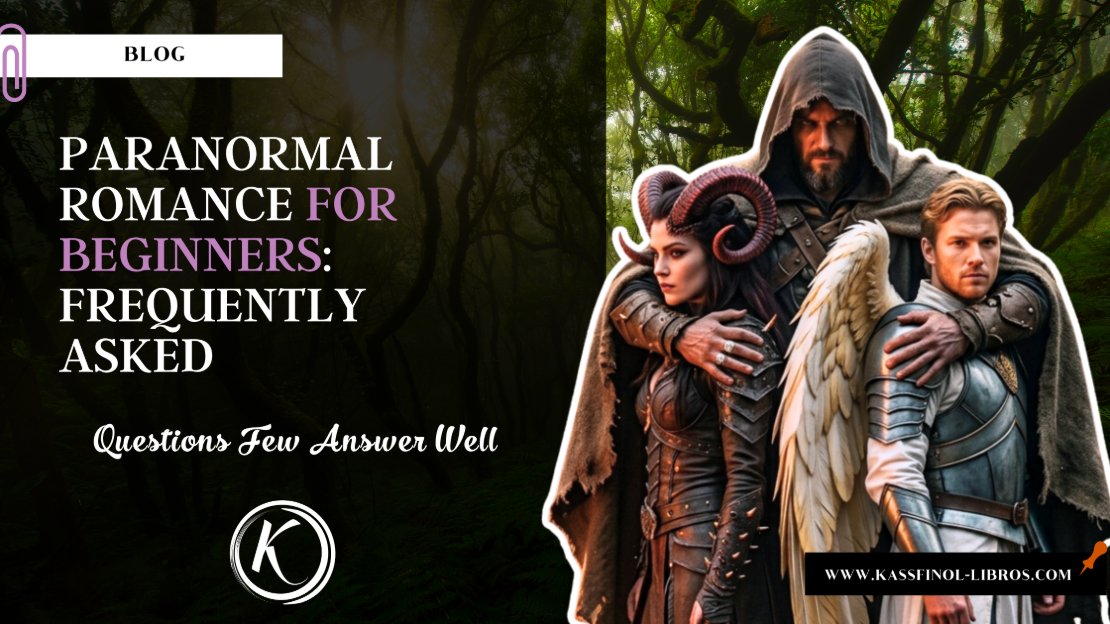
If you’re coming to paranormal romance for the first time, you probably have more questions than answers. The genre has its own rules, its own vocabulary, its own conventions, and if there’s no one to explain them to you, you can end up reading the wrong book at the wrong time and conclude the genre isn’t for you, when in reality you just picked the wrong door to walk in through.
I’ve been writing paranormal romance in Spanish for over fourteen years from Venezuela, Paraguay and Ecuador (yes, I’ve moved around a few times). I’ve talked to thousands of women readers over that time, and I know which questions keep coming up, the most common confusions, and the mistakes beginners make. This post exists so you don’t make the same ones.
WHAT EXACTLY IS PARANORMAL ROMANCE?
Paranormal romance is a literary subgenre that combines a love story as its central axis with supernatural elements that are part of the characters’ world. The key word is “central”: the romance isn’t a decorative accessory of a fantasy plot, it’s the main engine of the story. Everything else, the vampires, the angels, the werewolves, the creatures of every kind, exists to serve that love story or in direct tension with it.

The difference from romantic fantasy, the genre it’s most often confused with, is in that relative weight: in romantic fantasy, the world and the adventure plot matter as much as or more than the romance. In paranormal romance, love always comes first, even if there are battles, conspiracies and entire mythologies around it.
The most common creatures in the genre are vampires, werewolves and shifters, angels and demons, witches and sorcerers, ghosts, and in recent years also demons with specific mythological backgrounds (Greek, Norse, Egyptian). But the genre isn’t limited to these categories: any supernatural element can be the starting point of a paranormal romance story if the love story is at the center.
HOW IS ADULT PARANORMAL ROMANCE DIFFERENT FROM YOUNG ADULT?
This is perhaps the most important question for a new reader, because reading an adult book when you’re looking for something young adult, or vice versa, can ruin the experience completely.
The difference isn’t only in the characters’ ages, though that matters too. It’s in three concrete elements:
The explicit content:
Adult paranormal romance includes intimate scenes with explicit descriptions. Not hints, but complete, detailed scenes. Young adult paranormal romance can have intense romantic tension, kisses and physical attraction, but it doesn’t go as far as explicit content. This is the first thing you should check before buying a book if you have a clear preference one way or the other.
Thematic complexity:
Adult paranormal romance usually explores darker themes: traumas, violence, morally ambiguous decisions, relationships with complicated power dynamics. Young adult tends to focus on emotional awakening, one’s own identity and first love, although it can have its dark moments too.
The characters’ dynamic:
In adult, the protagonists are usually beings who have existed for centuries, with complex previous histories and old wounds. In young adult the protagonists are younger, they’re discovering the supernatural world at the same time as the reader, and their personal growth arc carries as much weight as the love story.
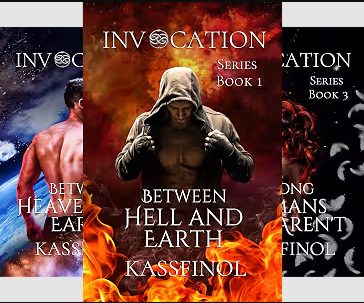
In my own catalogue, this distinction is very clear: my Invocation Series is adult paranormal romance, with explicit content, characters with decades of history behind them and dark plots.
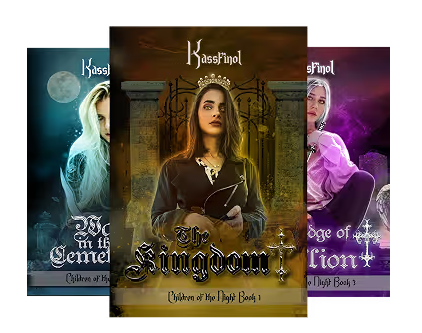
My Children of the Night Saga is young adult paranormal romance, without explicit content, with younger protagonists discovering a supernatural world that surrounds them without them knowing. I can offer you both options depending on what you’re looking for.
WHERE DO I START IF I’VE NEVER READ PARANORMAL ROMANCE?
It depends on three things: whether you want adult or young adult, whether you want to read in original Spanish or translations, and how much time you have to commit to a long saga.
If you want to start with no commitment:
Read short stories first. On my website I have more than forty free paranormal romance short stories you can read directly in your browser without downloading anything and without paying anything. They’re the best first contact because they’re short, they carry my full voice and they give you a real idea of whether this kind of story is for you. If you finish a story wanting more, the genre is for you. If you leave it halfway, maybe you need to try another subgenre first.
If you want adult paranormal romance in translated Spanish:
Start with Kresley Cole and her Immortals After Dark saga, or with J.R. Ward and the Black Dagger Brotherhood. Both are the most solid references of the adult genre and both are available in Spanish. Cole has more humor and is more accessible for someone starting out. Ward is more intense from the very first chapter.
If you want adult paranormal romance written directly in Spanish:
My Invocation Series is the entry point. Five paranormal romance books with angels, demons and supernatural creatures, set in Venezuela, with characters who think and speak like Latin Americans.
If you want young adult paranormal romance:
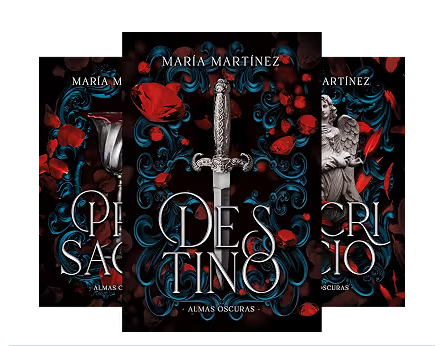
The Almas Oscuras trilogy by the Spanish author María Martínez is a good option in Spanish.
For something written from Latin America, my Children of the Night Saga has original creatures, romance without explicit content and an original universe that doesn’t borrow from Anglo-Saxon mythology.
DO I HAVE TO READ THE BOOKS OF A SAGA IN ORDER?
It depends on the saga. There are two kinds of structure in paranormal romance:
Sagas with a shared universe but independent stories are the most common. Each book has its own protagonist couple and its own complete love story, even though the secondary characters of one book become the protagonists of the next. In this type of saga you can start with whichever book calls to you most without feeling lost, although it’s always recommended to start with the first one to understand the universe from the beginning.
Sagas with a continuous story follow the same protagonists across several books and you definitely have to read them in order. If you start with the third one, you won’t understand anything about what’s happening emotionally between the characters.
My series are of the first type: each book has its protagonist couple and its complete story, even though the characters know each other and appear in several books. You can start with any of them, although the first one always presents the universe more fully.
IS PARANORMAL ROMANCE THE SAME AS URBAN FANTASY?
No, although they’re constantly confused. The main difference is in the weight of the romance within the story.
In urban fantasy, the supernatural element is integrated into a contemporary world, generally a city, and the protagonist is usually a hunter, detective or warrior who has adventures in that world. The romance may exist, but it’s not the center of the plot. You can finish the book without the love story having been resolved and that’s fine because the main plot was the adventure, not the love.
In paranormal romance, the love story has to be resolved. It’s an implicit promise of the genre: the ending always has to be hopeful for the protagonist couple, even if the external plot stays open for the next book. If you finish a paranormal romance book and the protagonists haven’t gotten anywhere in their relationship, something went wrong.
This distinction matters because there are authors who write urban fantasy with romantic elements and sell it as paranormal romance, and vice versa. When you buy a new book in the genre, look for reviews that confirm the HEA (happy ever after) or the HFN (happy for now, the provisional happy ending) is present. That confirms it’s real paranormal romance and not urban fantasy in disguise.
DOES PARANORMAL ROMANCE HAVE ANYTHING TO DO WITH HORROR?
No. This confusion is very common because both genres share supernatural elements, but they’re completely different in their intention and in what they produce in the reader.
Horror seeks to generate fear, tension and anguish. Its supernatural creatures are threats, sources of horror, entities that represent death or the unknown in a terrifying way.
Paranormal romance uses those same creatures, vampires, demons, werewolves, but turns them into characters the reader can empathize with and, more importantly, characters the protagonist can fall in love with. The vampire isn’t scary: he’s intriguing. The demon doesn’t threaten: he seduces. The werewolf isn’t a monster: he’s a protective alpha with communication problems.
They’re two genres that share a supernatural vocabulary, but that point in completely different emotional directions. I write in both, paranormal romance and horror, and I guarantee you that when I write horror, my creatures don’t make you want to fall in love with them, and when I write paranormal romance, my creatures don’t genuinely scare you, even if they’re dark.
A concrete example: my Un Mundo de Sombras Saga has creatures called Las Sombras, which are dark and mysterious, but the story is romance because love is at the center of everything. My Becoming a Zombie series is horror because the goal is to unsettle you, not to make you fall in love.
WHY ARE THE MALE PROTAGONISTS OF PARANORMAL ROMANCE SO INTENSE?
Because they’re beings who have existed for centuries or millennia and in that time have learned not to fall in love, not to need anyone, to survive alone in a world that considers them monsters or uses them as weapons. When that being finds their partner, the intensity of what they feel is amplified by everything they repressed for centuries.
It’s a narrative formula that works because the contrast is enormous: the most controlled, coldest, most lethally powerful person in the entire world loses control over an ordinary human being. That dynamic generates romantic tension almost automatically.
But there’s something more: the best male protagonists in paranormal romance aren’t intense only because of their supernatural power. They’re intense because they have real wounds, specific traumas, concrete fears. The emotional intensity always comes from there, from inside, not from the fangs or the claws.
In my books I work a lot on this dimension. The male characters in my Invocation Series are powerful, yes, but what makes them interesting is what they carry: past decisions, loyalties that trap them, love they don’t know how to handle because they’ve spent too long existing without needing anyone.
IS PARANORMAL ROMANCE ONLY FOR WOMEN?
The genre is written mostly by women and has a woman as its main protagonist in almost every case, which makes its main reading audience female. But it’s not exclusive. There are male readers of the genre, though they’re a minority, and there’s something paranormal romance offers that other genres don’t: the exploration of desire and emotional vulnerability from a female perspective, without apologies and without censorship.
If you’re a man reading this: well-written paranormal romance has complex worlds, action plots, elaborate mythologies and male characters who are anything but flat. If you can get past the prejudice about the genre, you’ll probably find something you like.
WHAT IS THE HEA AND WHY IS IT IMPORTANT IN PARANORMAL ROMANCE?
HEA means Happy Ever After, the definitive happy ending for the protagonist couple. HFN means Happy For Now, a provisional happy ending that leaves the relationship on track but not completely resolved.
Both are acceptable in paranormal romance, but the genre’s convention is that at some point in the story, generally at the end of the book or at the end of the saga if the love story extends across several volumes, the couple has to reach a place of hope and stability. Not necessarily perfection, but the promise of a future together.
This distinguishes paranormal romance from general literature: in this genre the happy ending isn’t optional and it isn’t a concession to the reader. It’s part of the pact between author and reader. When you read paranormal romance you know you’re going to suffer along the way, but you know that in the end the couple is going to be okay. That certainty is part of the pleasure of reading the genre.
In my books I always respect that pact. My characters suffer, a lot sometimes, but love always finds its place in the end. It’s one of the reasons I write this genre and not another.
WHAT ARE TROPES AND WHICH ARE THE MOST COMMON IN PARANORMAL ROMANCE?
Tropes are recurring narrative situations the genre uses conventionally and that readers recognize and even actively look for. They’re not clichés in the pejorative sense: they’re formulas that work because they generate romantic tension effectively.
The most common ones in paranormal romance are:
Enemies to lovers, where the protagonists start on opposite sides or with concrete reasons not to want each other, and the romance emerges in spite of, or precisely because of, that initial tension. It’s one of the most popular tropes in the genre.
The fated mate, common especially in stories with shifters or vampires: the idea that there’s only one person in the world for each supernatural being, and that when they find them the recognition is immediate and inevitable. The tension comes from resisting that recognition or from the circumstances that complicate what should be simple.
The guardian and the protected, where the male protagonist has a mission or an instinct to protect the female protagonist, which creates a forced proximity that inevitably turns into something more.
The second-in-command or beta, where the character who supports the main protagonist ends up being the protagonist of his own book in the saga, with all the emotional depth the reader already knows from having followed his story as a secondary character.
The human in the supernatural world, where the protagonist discovers a world she didn’t know existed and has to adapt to it while falling in love with someone who belongs to that world.
In my books I use several of these tropes, but always with my own variations. The fated mate appears in my Invocation Series but with specific rules from my mythology that make it different from how it works in other sagas. Enemies to lovers is also present, but the reason for the initial conflict always has Latin American cultural roots that give it a particular texture.
HOW DO I KNOW IF A PARANORMAL ROMANCE BOOK IS GOOD BEFORE BUYING IT?
Some reliable signs:
Read the first pages if the platform allows it. Paranormal romance has to grab you fast: if in the first chapter you don’t feel curious about at least one of the protagonists, it probably won’t get better.
Look for reviews on Goodreads, not just the positive ones. Three-star reviews are usually the most informative because they come from readers who finished the book with mixed feelings and explain exactly what worked and what didn’t.
Verify the HEA. If the reviews mention an open ending or a cliffhanger without resolution in this volume, make sure the other books in the series are available before you start.
Check whether the book is paranormal romance or urban fantasy with romance. Reviews usually clarify this with phrases like “the romance isn’t the center” or “there’s a lot of action, but little romance”.
And if you don’t know where to start but you want paranormal romance written directly in Spanish, my free short stories are the easiest, risk-free way to try the genre with my voice before committing to a saga.
WHAT MAKES A PARANORMAL ROMANCE UNFORGETTABLE?
I’ve read a lot of the genre and I’ve written more than twenty-four novels in it. What separates a paranormal romance you forget within a month from one that stays with you for years has little to do with the creature chosen or the mythology built. It has to do with three things:
The protagonist’s voice: If the female perspective is flat, generic or simply functional for the plot’s advance, the book leaves no mark. The protagonists who stay have a specific way of seeing the world, of reacting to the supernatural chaos around them, of relating to the male protagonist that you couldn’t swap with the protagonist of any other book in the genre.
The male protagonist’s wound: Supernatural power is attractive but doesn’t create emotional connection. The wound does. The vampire who can’t trust because he was betrayed in the 16th century. The demon who has spent centuries believing he doesn’t deserve love. The shifter who lost his previous mate and doesn’t know if he can open up again. Those specific wounds are what make the reader truly care about the love story.
The earned resolution: The best paranormal romances don’t resolve love by magic or by destiny but because the characters do the emotional work of resolving it. They choose vulnerability instead of protection. They choose to trust when everything tells them not to. That active effort is what makes the HEA feel deserved instead of given.
That’s what I try to build in each of my books. I don’t always achieve it perfectly, but it’s always the goal.
I’m Kassfinol, a Venezuelan author of paranormal romance and horror published on Amazon KDP since 2012. If you have more questions about the genre or about my books, leave them in the comments. I’m here to answer them.
You can find my paranormal romance series here: Invocation Series (adult), Children of the Night Saga (young adult), Un Mundo de Sombras Saga and Immortal Princesses Duology. And if you want to start for free, here are my free short stories.