
If the internet already has a list of five «writers who were murderers», this one adds seven more. Not to impress you, but to answer a question that list never dares to answer: who was it, how was it proven and what happened after the crime? Here there are twelve real, verified cases. Each one with its sources.
I ran into that list too. The same five names always come up: Anne Perry, Krystian Bala, Liu Yongbiao, Jean-Jacques Klinkhamer and Óscar Castro. On the surface, a decent selection. But if you look closely, there’s something those five share that should set off alarms: all of them appear in the same Spanish Wikipedia article, the one the entire internet has been copying for years.
At the end I’m going to ask you the question that really matters: if you know that the person who wrote the book is a convicted murderer, do you read it the same way? I already talked about the separation between the author and the work in this post, so I’m not going to repeat the whole argument here. But with these specific cases on the table, the question stops being abstract.
All the cases at a glance
Because I’m not going to talk without evidence :V
- Newsweek
- Wikipedia
- Wikipedia
- Infobae
- El Punt Avui
- Wikipedia
- Open Culture
- Wikipedia
- Forbes
- Wikipedia
- CNN
- Infobae
You already know the first five: they’re the ones on the internet’s list. To these, I add the seven below. I sorted them into groups by type of case, so you can compare the patterns: the literary system that grants freedom, the double life, the «inspiration» from the real crime, and the fiction that ends up predicting reality.
The literary system as a safe-conduct pass (and what happens when it fails)
Jack Henry Abbott and Norman Mailer: fame bought freedom, and freedom lasted six weeks
Jack Henry Abbott had spent more than a decade in prison for killing a fellow inmate. Inside, he wrote In the Belly of the Beast, a literary account of violence and the prison system that caught Norman Mailer’s attention, then the most influential writer in the United States. In 1981, Mailer himself used his influence to get him released on parole, a decision that ended in tragedy: six weeks after his release, Abbott stabbed Richard Adan, a waiter, to death outside a New York restaurant.
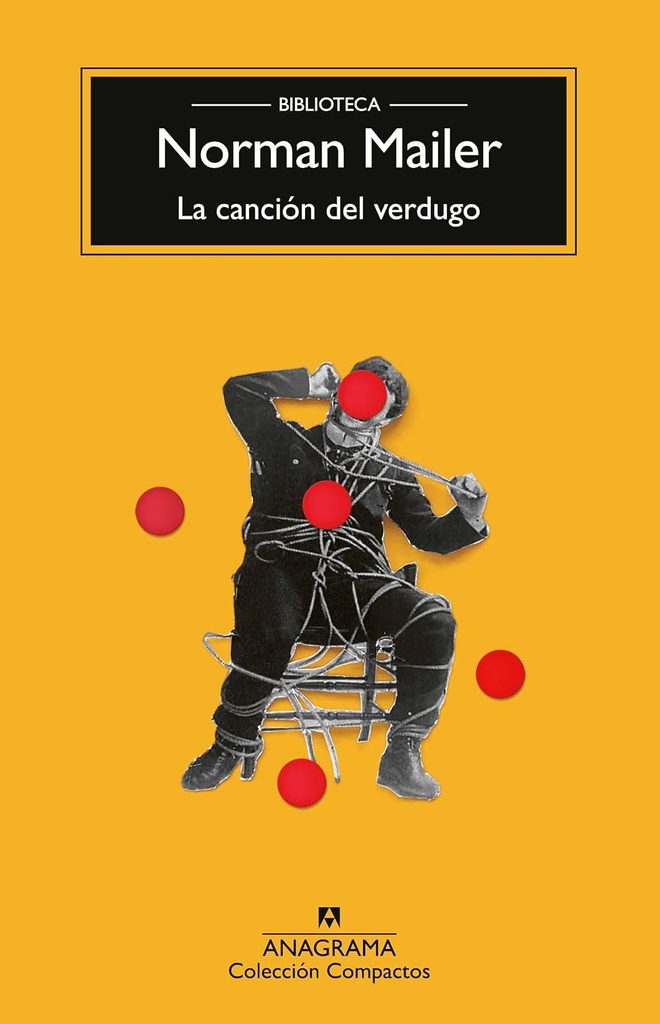
Mailer didn’t stop defending him. He paid his legal defense and kept visiting him in prison until the end. Abbott was sentenced to life imprisonment and died in 2002 in a New York prison. The case remains the clearest example of how literary prestige can be converted into institutional trust that nobody actually checked.
There’s a detail that makes it even darker: in his letters, Abbott kept writing with the same cold lucidity that made his book famous. Literary talent was real. The inability to stop killing was real too. The system saw the first and assumed the second didn’t exist.
The double life: when the crime continues while the literary career takes off
Jack Unterweger: the journalist who covered the murders he himself was committing
In 1976 the Austrian Jack Unterweger was convicted of murdering an 18-year-old woman. In prison, he wrote Purgatory, an autobiography that moved the Austrian literary world to campaign for his release. In 1990 he was released and became an overnight celebrity: a writer, a TV presenter and a journalist who covered, for the press, the very murders of prostitutes he was committing again in Vienna and Los Angeles.
What came next wasn’t a second chance, but a second run of crimes: at least nine victims in Austria and three in the United States. When the evidence closed in on him, Unterweger fled to Miami, was arrested there in 1992, convicted and sentenced to life imprisonment. He hanged himself in prison the day the sentence was confirmed.
When real death «inspires» the work (and nobody calls him a murderer)
William S. Burroughs: he killed his wife playing William Tell and turned it into his literary origin
On September 6, 1951, in Mexico City, Burroughs shot his wife Joan Vollmer in the head while playing William Tell: he placed a glass on her head and fired at it. She died instantly. His explanation, repeated for decades, was that he was drunk and didn’t want to kill her. The official classification of the act ended up as involuntary manslaughter, with a suspended sentence.
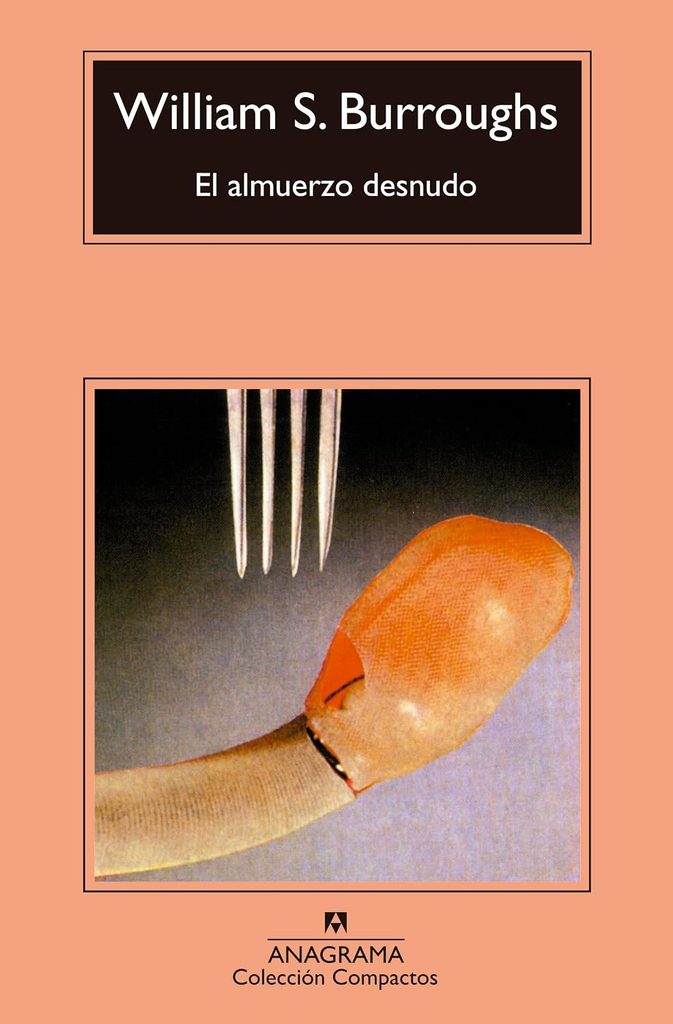
What’s notable goes beyond the crime itself: Burroughs himself said that his writing began there, that everything he wrote after that day was a response to that death. Nobody in his literary circle ever called him a murderer. In this case, the crime didn’t end the career; it became its founding myth.
When the police fiction wasn’t entirely fiction
Michael Peterson: the novelist of «the staircase» who documented his own case in real time
Michael Peterson was a newspaper columnist and a successful novelist when, in December 2001, his wife Kathleen was found dead at the foot of the stairs in their house in Durham, North Carolina. Peterson said she’d had a fatal fall. Prosecutors said he’d bludgeoned her to death. The case became a Netflix documentary series, The Staircase, and kept public attention on him for more than two decades.
The trial got complicated by multiple appeals and a key forensic scandal involving a prosecution expert who fabricated evidence. In 2017, Peterson accepted an Alford plea, a legal formula in the United States that lets you plead guilty without admitting guilt. He was released from prison, but with the guilty verdict on his record and the victim’s family maintaining that he killed her.
Fiction as prophecy: the murder written before it was committed
Ronald Thomas Chase, alias Robert McLeod: the ex-soldier who wrote his victim’s death ten years in advance
McLeod spent nine years in prison for a bank robbery before becoming a writer under the pseudonym Robert McLeod. His first novel, The Crying Clown, published in 1990, tells of a man who murders a couple in a remote cabin in a national park. In 1997, McLeod murdered the real owner of the cabin where he was living and buried her in the garden of the same place. The FBI investigator who compared the novel with the crime found matches that are hard to explain away as chance: the scene, the victim profile and even the type of weapon.
Under the pseudonym, McLeod denied being the author of the novel that described his crime. The FBI found his manuscripts, letters and documents confirming that he was the author. In 2000, he pleaded guilty to murder and was sentenced to life imprisonment without the possibility of parole. He died in prison in 2022.
In the books that came after, the pattern was the same: the fiction anticipated or echoed the crime. The question that stays in the air is whether the novel was a rehearsal, a confession in advance or simply a coincidence that nobody wants to accept as coincidence.
The irony: the writers who wrote murder guides for themselves
Nancy Crampton-Brophy: she wrote «How to Murder Your Husband» and was convicted of murdering hers
Nancy Crampton-Brophy was a romantic suspense novelist, the author of more than 70 novels. In 2011, she published an article titled How to Murder Your Husband, a kind of practical guide on how to do it without getting caught. In 2018, she shot her husband Daniel Brophy, a chef, in the kitchen of the culinary institute where he worked. He died at the hospital. Prosecutors presented the article, the insurance policies and the debts as evidence that the murder had been planned. In 2022, she was convicted of second-degree murder and sentenced to life imprisonment.
The prosecution laid out a case with a very simple structure: a marriage in financial crisis, life insurance policies and an article that described, step by step, how to murder your husband without getting caught. The jury didn’t need anything else. Crampton-Brophy maintained her innocence until the end.
The most recent case: when the convict keeps writing from prison
Alfonso Basterra and Rosario Porto: the Asunta case, and the book that came out of prison in 2025
On September 22, 2013, the body of 12-year-old Asunta Basterra was found on a forest road in Teo, Galicia. Her parents, Alfonso Basterra and Rosario Porto, were arrested and charged with her murder. In October 2015, both were convicted: Basterra received 18 years in prison, and Porto, 18 years and 6 months. Rosario Porto died in prison in November 2020.
Basterra is still in prison, without interruption, since he was arrested in 2013; preventive detention counted toward the sentence he began serving formally in 2015. In February 2025, a publisher announced that Basterra had written, from prison, a novel set in rural Spain in the 1940s, and that he was already working on a second part. The case is the most recent on this entire list: it’s only been a few months.
So, would you read them?
Here is the question I promised you at the beginning. Not whether these books are good or bad — that’s the least of it — but whether you’d read them knowing what you know now. And I suspect your answer will depend on how much time has passed since the crime, whether the victim feels close to you or abstract, and, to be precise, how much literary prestige the name on the cover carries. It’s easier to argue that «you have to separate the author from the work» when the author is Burroughs and the work is Naked Lunch, than when the author is Basterra and the work came out of the same prison where he’s serving his sentence for killing his daughter. The argument is the same. The reaction isn’t.
If, after this list, you still think a clean line can be drawn between who wrote the book and what he did with his hands outside the page, read it. If you’re not so sure anymore, read it too. And tell me in the comments which of these twelve cases is the hardest for you to digest.
I’m not a murderer either (just to be clear, in case there are any doubts) :V
Everything you just read is real: names, sentences, verifiable dates. Mine is different. I haven’t killed anyone, but I do spend a good part of my career inside the heads of characters who do, for reasons ranging from the tragic to the disturbing.

In Becoming a Zombie, the main character is literally a serial killer who kills his first victim in chapter one and enjoys it — in his own words, he likes the adrenaline rush of killing — and, yes, this is the book’s own description, written by me.

In Diary of a Psychopath, the protagonist is also a psychopath, in the purest sense: she kills without remorse, she manipulates people and she describes it all with a clarity that sometimes unsettles me.
The difference between these cases and mine is that my monsters are fiction. The ones in this post were real, they left real victims, and the sentences that proved it are in public records. If you want to see how far a fictional psychopath can go — one that I invented, not one that came out of a courtroom — the books are here.
Frequently asked questions about killer writers
Which real writers were convicted of murder? Among the documented cases are Liu Yongbiao, Krystian Bala, Anne Perry, Jack Henry Abbott, Jack Unterweger, William S. Burroughs, Michael Peterson, Robert McLeod, Nancy Crampton-Brophy, Alfonso Basterra and Rosario Porto.
Are there writers who killed before becoming famous? Yes. Jack Unterweger killed in 1974, was convicted in 1976 and became a celebrated writer after his release in 1990. Anne Perry also committed her crime before her literary career.
Why do some writers who killed keep publishing? Because the crimes don’t always end their careers: some wrote from prison, others were released and kept publishing, and in some cases the crime itself became part of the author’s public image.
Can you separate the author from the work when the author is a murderer? That is the central debate of this post. Some readers can do it, others can’t, and the answer depends on the case, the time that has passed and the author’s prestige.
What is the most recent real case of a killer writer? Alfonso Basterra, convicted in 2015 for the murder of his daughter Asunta. In 2025, a novel he wrote from prison was published.