
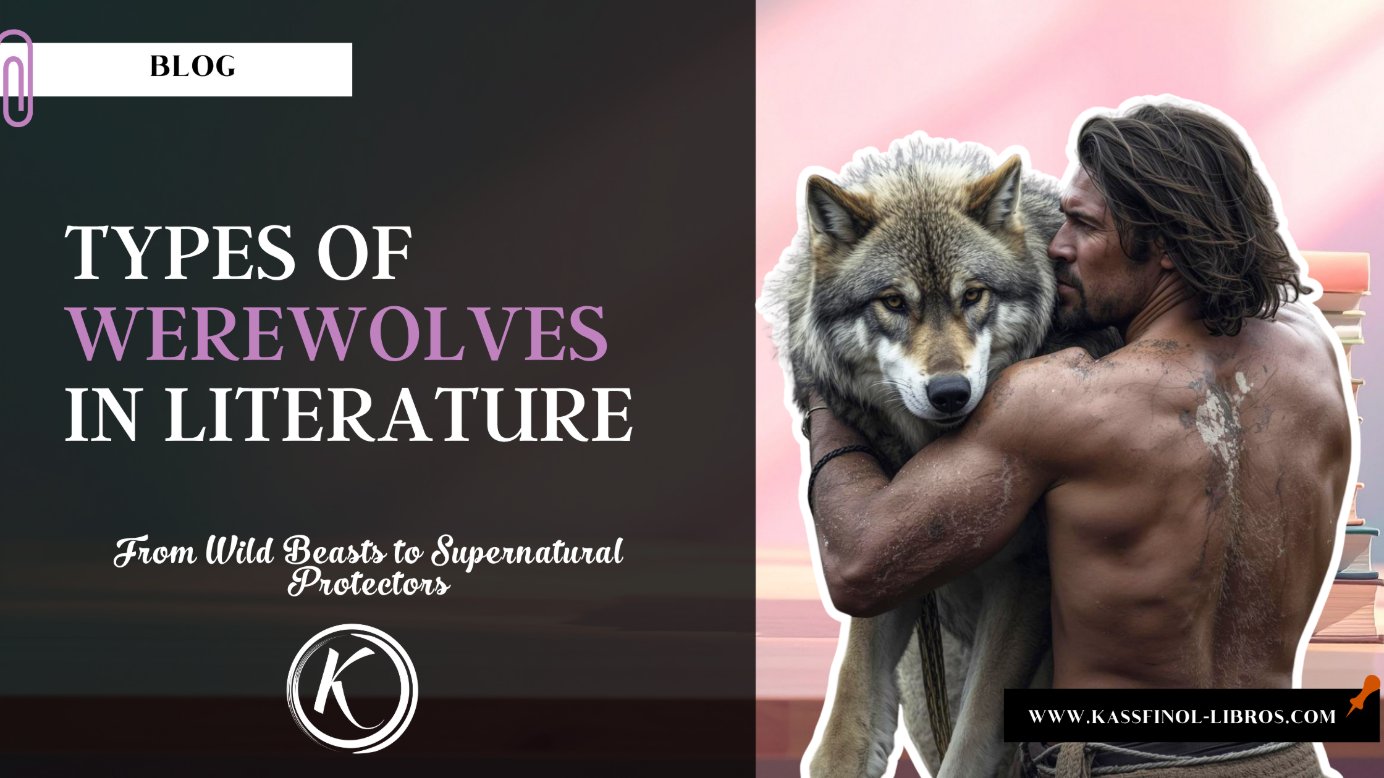
Werewolves have been fascinating figures in literature since time immemorial. They represent deep dualities: man and beast, control and chaos, love and fear. But not all werewolves are the same.
Throughout literary history, authors have shaped these lycanthropes to fit their plots, turning them into terrifying predators, romantic heroes, or victims of their own condition. Here is a breakdown of the types of werewolves you can find in books, with iconic examples to back up each category.
1. The Traditional Werewolf: Uncontrollable Beast
This type of werewolf is the classic: a creature that transforms under the light of the full moon, losing every trace of humanity. It is wild, dangerous, and often tormented by its inability to control its impulses.
Example:

- The Werewolf of Paris by Guy Endore (1933): A pioneering book, considered the “Dracula of werewolf literature.” The story follows Bertrand Caillet, a werewolf whose lycanthropy is presented as an uncontrollable curse during the Franco-Prussian War and the Paris Commune of 1870-71, leading him to commit atrocious acts of violence and necrophilia.
2. Protector Werewolves: Guardians of the Pack
These werewolves usually belong to a pack or clan and take on protector roles, whether of their family, their territory, or the humans they love. Although they have superhuman strength, their focus is more on caring than on destroying.
Example:

- The Twilight Saga by Stephenie Meyer: Jacob Black is the perfect example of this type. As a member of the Quileute pack (actually shapeshifters, not traditional lycanthropes), he protects both his community in La Push and Bella Swan, combining ferocity with unbreakable loyalty toward those he loves.
3. Romantic Werewolves: The Beastly Lover
These werewolves are lycanthropic versions of the “bad boy.” Intense, passionate, and often dangerous, they become the object of desire (and of trouble) of the romantic protagonists.
Example:

- The Dark-Hunter Series by Sherrilyn Kenyon: Several characters in this extensive paranormal series, like Vane Kattalakis, are werewolves who combine supernatural physical attractiveness with a deep desire to protect and passionately love their destined mates.
4. Tragic Werewolves: Victims of the Curse
This type of werewolf didn’t choose to be what it is. Lycanthropy is a curse that causes them suffering, whether physical or emotional, as they try to reconcile their human side with their beastly side.
Example:

- Harry Potter and the Prisoner of Azkaban by J.K. Rowling: Remus Lupin is a werewolf who suffers deeply because of his condition. He is a tragic character who struggles to lead a normal life while dealing with social prejudice and the painful transformations that occur every full moon. His story explores themes of discrimination and acceptance.
5. Wild Werewolves: Pure Predators
These werewolves have no interest in humanity or moral codes. They are predators through and through, hunting for pleasure or instinct. They don’t seek redemption or to fit into the human world.
Example:

- Cycle of the Werewolf by Stephen King (1983): Adapted to film as Silver Bullet, this illustrated short novel presents a werewolf that terrorizes the small town of Tarker’s Mills, killing one resident each month for a year. The lycanthrope is pure violence and bloodlust, with no possible redemption.
6. Alpha Werewolves: Pack Leaders
Alphas are not just the natural leaders of their pack; they are imposing, dominant, and charismatic. In literature, these werewolves often face dilemmas related to power and responsibility.
Example:

- Mercy Thompson Series by Patricia Briggs: Adam Hauptman, the Alpha of the Columbia Basin pack, is a werewolf who combines strength and leadership with a deep sense of justice. As a leader, he must balance the needs of his pack with the safety of the community and his love for Mercedes.
7. Scientific Werewolves: Rational Lycanthropes
These werewolves don’t let themselves be consumed by their bestiality. They use their intellect, often scientific, to investigate and control their condition, challenging the idea that lycanthropy is a pure curse.
Example:

- The Strange Case of Dr. Jekyll and Mr. Hyde by Robert Louis Stevenson: Although technically not a werewolf, the scientific duality of this character has inspired countless similar versions in literature about lycanthropes. Dr. Jekyll tries to scientifically control his transformation into Mr. Hyde, exploring human duality through chemistry.
8. Urban Werewolves: Modern Wolves
These werewolves live in urban environments and navigate between their supernatural life and the challenges of the modern world. They often get involved in plots of crime, politics, or romance in big cities.
Example:

- Bitten (Women of the Otherworld Series) by Kelley Armstrong: The protagonist, Elena Michaels, is the only female werewolf in the world. She lives in Toronto and tries to maintain a normal human life as a journalist while struggling with her lupine nature and her obligations to her pack in New York state.
9. Mythical Werewolves: Connection to the Sacred
These werewolves are deeply rooted in myths and legends. Their lycanthropy is related to supernatural powers or sacred forces, giving them an almost divine air.
Example:

- American Gods by Neil Gaiman: Although not a book exclusively about werewolves, the supernatural creatures that appear are deeply connected to ancestral myths. Gaiman explores how ancient gods and creatures survive in modern America, including references to animal transformations from various mythologies.
10. Teenage Werewolves: Juvenile Lycanthropes
Popular in young adult literature, these werewolves face both their physical transformations and the typical emotional tribulations of adolescence. It’s the supernatural equivalent of high school drama.
Example:

- The Wolves of Mercy Falls (Shiver Trilogy) by Maggie Stiefvater: In this acclaimed series, Sam Roth is a werewolf who struggles with the duality of his nature and his love for Grace Brisbane. The transformations are tied to temperature: Sam is human in summer but turns into a wolf in winter, knowing he will eventually be trapped in wolf form forever.
Conclusion: Two Souls, One Destiny
Werewolf literature shows us that these characters are not just beasts howling at the moon; they are symbols of our internal and external struggles. Whether you prefer a loyal protector, a passionate lover, or an uncontrollable monster, there’s always a werewolf that fits what you’re looking for in a story.
Now tell me, which of these types of werewolves do you identify with most, or which would you like to explore in your next read? 🐺