
If you’ve ever run into someone who tells you a book written in Latin American Spanish is “wrong” just because it doesn’t sound like what they consider “real Castilian”, get ready, because you’re about to give them a mini slap of reality with this article. Hold on tight, this one comes with facts and a good dose of panhispanism.
Linguistic Panhispanism: A Dose of Reality for Purists
First, let’s be clear: Spanish is not the property of Spain. No, sir. Spanish is like that giant franchise that started in a single country but now has branches with plenty of style all over the world. And that’s what we call linguistic panhispanism. A lovely little word that the Real Academia Española (RAE) and 22 other language academies endorse, where it’s recognized that every Spanish-speaking country has its own touch, its own flavor, and none of that is an “error”.
So, if you think only what sounds like the Iberian Peninsula is worthy of a place on the shelf, let me tell you you’re missing a bit of linguistic geography. Spanish is bigger than that! There are more than 600 million speakers all over the world, and we don’t all speak the same way. Thanks to panhispanism, it’s accepted that Spanish has variants, and each one is as correct as the next.
Why Is Panhispanism So Important?
Because, dear reader, we don’t live in a bubble where everything is said the same way. We are a language that adapts and evolves according to the country. The idea that there is only one correct way to speak or write Spanish is older than the monarchy.
Stop believing that just because something sounds different it’s an “error” — that’s out of fashion. The 23 language academies that make up the Association of Academies of the Spanish Language (ASALE) work together so that linguistic norms respect every variant of the language. Yes, my friend, and it’s all official — no “Latino whim” about it.
Still Think Latin American Spanish Is “Wrong”? Let’s Look at Some Examples…
To finish knocking down the myth, here are some examples that will make you think twice before dropping an ill-informed linguistic comment.
- In Spain they say “ordenador”, but in Mexico, Colombia or Argentina we say “computadora”. Is either one wrong? No! Both are valid depending on the region.
- In Argentina they use “vos” instead of “tú”, and that doesn’t take a shred of correctness away from Rioplatense Spanish. So if you see a book with “voseo”, don’t start crying. It’s perfectly well written.
- In Mexico we say “platicar”, while in Spain they prefer “charlar”. And the RAE backs both! So please, don’t overcorrect when you read a text that isn’t from the motherland.
- In Venezuela we say “chamo”, while in Spain they use “chaval”. Is one better than the other? Of course not.
And the list goes on. If you don’t understand why Latin American Spanish sounds different, remember: every country has its own twist, its own expressions, and that makes it just as valid as any other.
The Role of the RAE and the Other Academies
What many people don’t know is that the RAE doesn’t run the show alone. Since 1951, ASALE has existed, and all the language academies work as a team so that the norms reflect the diversity of Spanish. So when someone tells you “only the RAE decides”, correct them kindly (or with a meme, whichever you prefer): it’s a joint effort. That’s why, when you read the Diccionario de la Lengua Española (DLE), you see it includes thousands of terms from Latin America and not just from Spain. It’s a panhispanic dictionary, get the idea?
Your New Best Friend: The Diccionario Panhispánico de Dudas
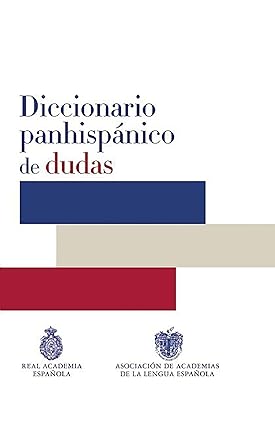
If you’re one of those people who needs backup for everything, let me introduce the Diccionario Panhispánico de Dudas (DPD), published in 2005 with the blessing of all 23 academies. This dictionary is designed to clear up those little doubts that come up when you face the wonderful diversity of Spanish.
Example from the DPD: In Spain they use “conducir”, but in Argentina, Chile and other Latin American countries we prefer “manejar”. Both are correct, and the DPD makes it crystal clear.
And Spelling?
Here’s where we get serious. Spelling is the only part where there really is a single standard for all Spanish-speaking countries. Don’t worry, there’s no mess here. Spelling rules are agreed upon by all the academies, and that lets us write in a uniform way. But spelling is one thing, and the use of words and expressions is another. Each region has its own vocabulary, and that is the beauty of Spanish.
So, Why Do We Still Think Spain’s Spanish Is “Better”?
This idea comes from colonial times, when Latin America was seen as “inferior” in cultural terms. But hey, we’re no longer in the 19th century. Today, every Spanish-speaking country has a voice and a vote in the rules of the language. Peninsular Spanish holds no special rank. It’s simply one variant among many. So get rid of that idea you’ve been dragging along since school and start valuing the diversity of the language.
Diversity Makes Us Strong
Accepting that Spanish is a varied language goes beyond courtesy. It shows intelligence. Panhispanism invites us to celebrate differences, not attack them. So, if you want to be a true connoisseur of the language, start by understanding that there is no single way to speak or write Spanish. And if a book sounds strange to you because it uses words you don’t know, great! That means you’re learning something new.
Stop Criticizing and Learn to Appreciate
The next time you think a book is badly written just because it doesn’t sound like Spain’s Spanish, think twice. Spanish is a global language with no single owner, and every variant is an essential part of that shared treasure.
So, the next time someone comes along with those backward ideas, pass them this article. So they can see there is no “correct” Spanish and “incorrect” Spanish — only different ways of speaking one language we share.
Long live the diversity of Spanish! Because yes, ladies and gentlemen, Spanish belongs to everyone, not just the motherland.