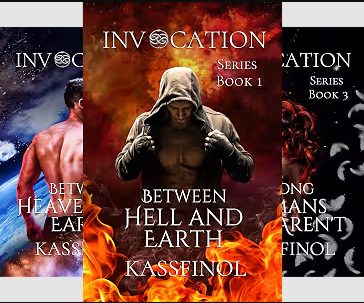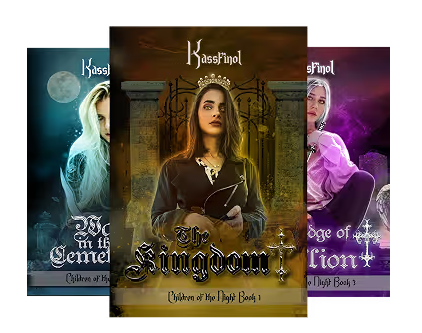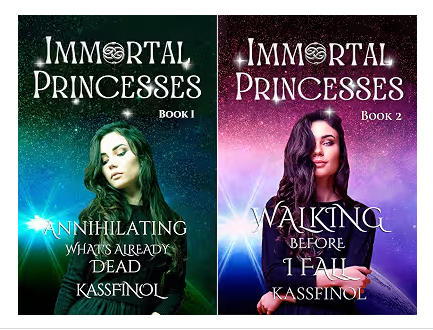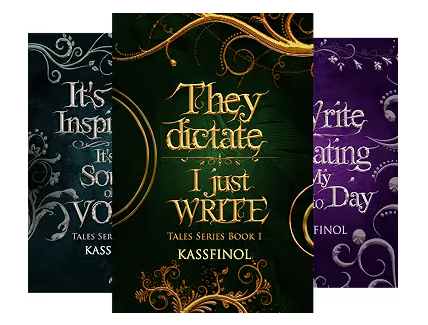
I’ve been writing paranormal romance and horror for 14 years, and if there’s one thing I’ve learned in all that time, it’s that each author’s process is as unique as her creatures. Mine is not the one they teach you in courses. It’s the one that works for me, with its quirks, contradictions, and carpal tunnel included.
Conflict First, Always
Some authors start with the character. Others with the world. I start with the conflict.
Before I know who’s going to star in the story, I need to know what problem exists, how it develops, and what kind of world makes it possible. Once I have that clear, I sit down to listen. And here’s the part that might sound strange: I listen to the characters’ voices in my head until one speaks louder than the rest. That’s the protagonist. I don’t choose them; they impose themselves.
Sometimes I feel more like a channel than a world-builder. I don’t know if that’s a gift, a quirk, or simply what happens when you’ve been writing long enough, that your brain starts working on its own. What I know is that it works.
Blue-Lined Notebook, Black Pen, and a Carpal Tunnel That Doesn’t Forgive
I write by hand first. Always.
Blue-lined notebook, white pages, black pen. I’ve also learned to use pencil, so I can erase scenes without turning the page into a battlefield of cross-outs. Then I type everything up.
The problem? I write too much, and my right hand is already sending me the bill. Carpal tunnel. Mandatory exercises. Copper-alloy gloves to bear the pain on bad days. Years ago I could sit down and write 100 pages in a single session without thinking twice. The body has memory, and it also has limits.
I write in silence when I can, although I’ve learned to work with noise. Silence is a preference, not a requirement.
Planning: I Used to Improvise, Now I Prepare Up to Three Scenarios
At the beginning, 14 years ago, I would sit down and write whatever came out. No plan. The only rule was coherence and no loose ends. Somehow, in the end, it all came together.
Now I plan more. But not in just one way: I prepare two or three possible scenarios for the same story and, as I write, I choose the one that fits best. I also organize character sheets with their voices, motivations, contradictions, and what they don’t say but think. That helps me make sure no one sounds like anyone else.
The process evolved, but the essence didn’t: the story rules. I follow it.
My Creatures Aren’t from the Manual
This is important and I like to make it clear: I break the rules, but I keep believability.
My demons aren’t like the rest. My angels aren’t either. My vampires have personality, they’re not evil just because, they have reasons, they have history, they have contradictions. I try to make sure none of them come across as cardboard cutouts.

And besides reinterpreting well-known creatures, I’ve created my own beings. The Children of the Night, those beings who live in the cemeteries and protect the living from the pain of loss, don’t exist in any mythology because I invented them. The same goes for the Shadows of the Un Mundo de Sombras Saga.
The rule I do always respect is internal coherence. If in my universe a vampire works in a certain way, that logic holds from beginning to end. The reader may not know the rules of the real world, but they can tell when something doesn’t make sense in the world you’re telling them about.
Dark Humor: I Don’t Plan It, But I Don’t Hold It Back Either
Dark humor just comes out of me on its own. In real life I sometimes have to hold myself back so I don’t put my foot in it in front of someone; there are contexts where not everyone is ready for that kind of humor.
With the characters I don’t hold back. I let them be. Even if they come across as cruel, even if they make people uncomfortable, even if they say what nobody would say out loud. The idea is to show them without the psychological masks that ordinary humans are used to. After all, it’s fiction. And fiction is exactly the place where those masks can fall.
From 100-Page Novels in One Sitting to Intense Short Stories
Years ago I couldn’t write short. I would sit down and at least 100 pages would come out. The long format was the only one my head could process.
Now I write a lot of short stories. They’re shorter, more intense, more specific. I’ve learned to develop a complete story in a few pages without it feeling incomplete, and that, for someone who for years only thought in sagas, was a real learning experience.
It’s not that I’ve abandoned the long format. It’s that now I handle both, and that gives me more freedom to tell what I want to tell in the space it needs, not the one the genre imposes on me.
What Nobody Tells You About Writing Paranormal Romance in Spanish
Fourteen years in this have taught me things that don’t appear in any writing manual. Here are the most important ones.
The genre has an image problem in Latin America that doesn’t exist in the English-speaking world. In the United States, paranormal romance is an established genre, with loyal readers and a solid market. Here there are still people who ask me if I write “devil literature.” The cultural religiosity is so strong that mixing supernatural beings with romance reads as provocation in certain contexts, not entertainment. That hasn’t stopped me, but it has forced me to be very clear from the start about what my books are and who they are for.
Romance is already “not serious literature.” Paranormal romance itself is a joke. There’s an unwritten hierarchy in Spanish-speaking literary circles where speculative fiction with romance occupies the last place. Learning that early saved me years of trying to convince people who didn’t want to be convinced. I write for my readers, not for those who decide what deserves to be taken seriously.
Pairing human women with supernatural beings is still taboo for part of the audience. The idea of a human heroine having a romantic story with a vampire, an angel, or a demon still generates rejection from readers who don’t know the genre. The curious thing is that those same readers have no problem with the same stories when they come translated from English. The problem isn’t the content, it’s the origin.
There’s one ground I’ve decided not to step on: the creatures of Latin American mythologies. Indigenous cultures and their cosmologies are the heritage of real communities with histories of dispossession and appropriation. Putting La Llorona or El Coco into a paranormal romance seems to me like delicate terrain I don’t want to cross without the knowledge and respect that requires. I’d rather create my own creatures than appropriate something that isn’t mine. That decision sometimes leaves me uncomfortable, because having my own Latin American cultural reference would be powerful. But I prefer that discomfort to the other one.
What I do know for sure after 14 years: paranormal romance in Spanish has real readers, loyal ones, hungry for stories that don’t come translated. They exist. It’s just that nobody asks them.
Why I’m Telling You This
I’m not telling you about my process so you can copy it. I’m telling you because I believe seeing how another author works, with her strange methods, her blue-lined notebooks, and her protesting right hand, is more useful than any generic formula for “how to write a novel in 30 days.”
Every process is valid if the result is a story that works. Mine is this one. Yours will be yours.
If you want to know the books that came out of all this process, start here: My paranormal romance and horror books.
My books in paperback and Kindle ♥
Keep reading paranormal romance